


Living in fear: The reality of going to school in era of rampant gun violence


Just a few years ago, Wayland High School did not lock its main doors. There were no visitor tags or key cards, making it so anyone could walk into the building if they wanted to. The precautions designed to keep intruders out were nearly unheard of, if not scrutinized, so what changed? In modern day America, preparing for the worst is part of the schooling experience for students, teachers and faculty, and after decades of unchecked gun violence in schools, this reality has altered the landscape of educational culture.
In the last decade, gun culture has reshaped the environment of educational spaces across the country. With 64 school shootings so far in 2025, worries of active shooter emergencies can cast a shadow over the former excitement of back-to-school shopping and new classes, framing the ever-changing reality of American school systems.
As we reach the end of the first quarter, the fear of armed intruders continues to be prevalent in the minds of some students and teachers.
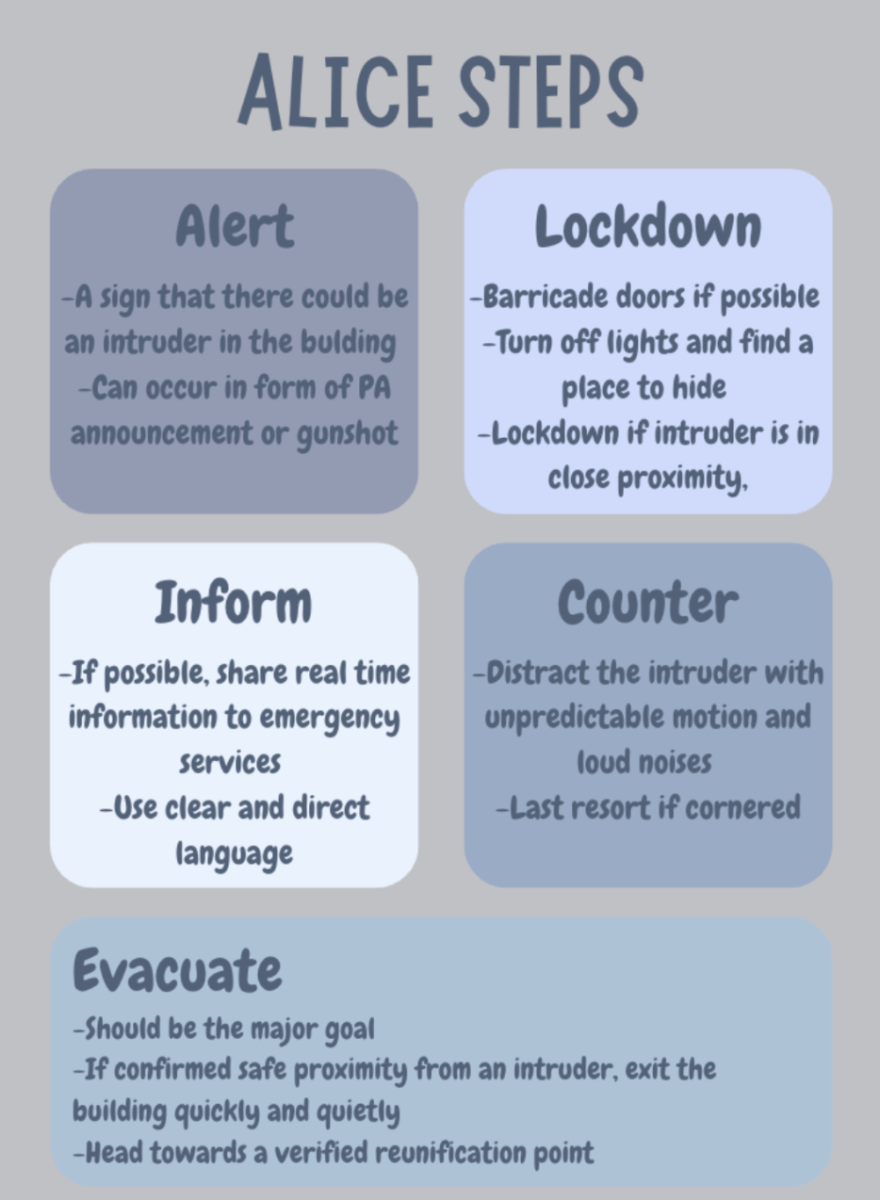
Every year, students and teachers undergo the annual Alert Lockdown Inform Counter Evacuate (ALICE) training, a mnemonic device used to structure the emergency response to an active shooter situation. Just days into the new school year, students learn when they should barricade a door, run for the woods or try to counter the attacker’s efforts. While necessary, this kind of training can re-instate the gravity of constant alertness and leave students with a greater sense of fear or apprehension.
Precautions, such as ALICE, can also be alarming for students and faculty who aren’t originally from America, a country where the abnormally high rates of school shootings are somewhat normalized in the media. English teacher Sara Snow described the transition from her school system in England, where she grew up, to her experience teaching in America, emphasizing her shock. There hasn’t been a school shooting in the U.K. since 1996.
“I felt like I was in this kind of parallel universe,” Snow said. “At first, when we come into school, we’re all looking forward to the future, and it’s all about growth and learning, so I couldn’t believe [that we had to] suddenly be trained to react as if we were in a combat zone, as if we were fighting some kind of war and we had to learn to protect ourselves.”
While this transition may be shocking for some, for others it’s far too familiar, with school shootings rapidly reaching a status where almost everyone could potentially have connections with someone who experienced gun violence, this idea holds strong at WHS, with Vice Principal Sean Gass having first hand experience in a real lockdown drill.
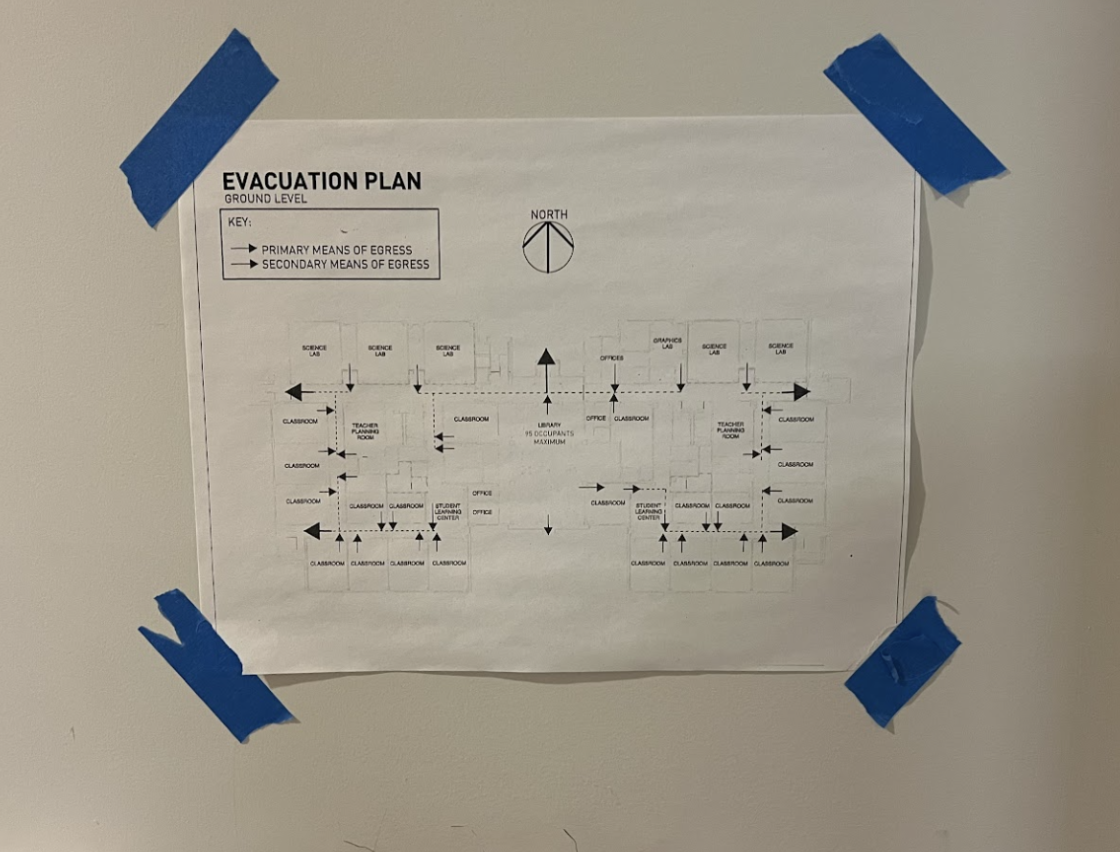
In 2025, it’s typical for teachers across the country, whether teaching in elementary, middle or high school, to have armed intruder training. With the rise in gun violence over the last decade, teachers find themselves needing to reevaluate safety protocol, bringing in a new era of learning. The need for emergency preparation in this way has led to a new era of safety training in schools across the country.
Wellness director and former safety coordinator Scott Parseghian and Youth Officer Shane Bowles played a key role in changing our community in a way that equipped faculty and students with the life saving information needed in an emergency situation.
In the early 2010s, following the rise of school shootings in the news, Parseghian realized that the school needed to take some kind of safety action due to…
“These school shootings were coming around, and we had to ask, ‘What do we do?’” Parseghian said. “We didn’t have a good plan.”
Parseghian and Bowles took a four day ALICE certification course, where they studied the emergency protocol, evaluated the best course of action in high pressure environments and responded to various staged intruder situations. The training was designed to replicate the intensity of a real ALICE drill, and at one point, mimicking a shooting with a fake intruder armed with an air gun.
“We were trying to hide in the corner, and the [fake] gunman shot us both,” Parseghian said. “I ended up having welts on my leg.”
Parseghian recalled that an impactful moment in his training involved listening to an audio recording from the 1999 mass shooting at Columbine High School. The recording included students asking their teacher whether they should escape through a back door. The teacher, who lacked ALICE training, incorrectly told the students to stay in place, resulting in several getting shot.
“That was really informing to me,” Parseghian said. “As a safety coordinator, you just want to do the job better.”
Following the training session, Parseghian and Bowles brought what they learned to the Wayland school district, teaching staff how to identify a potential intruder and what actions to take once a threat is found.
Parseghian and Bowles observed the initial reactions of teachers to a staged intruder lacking identification, watching to see whether the situation raised a red flag. According to Parseghian, some teachers let the intruder into the building, and no one inside asked any questions.
“That was an eye opening experience for people because [the teachers] actually opened the door for this person, then they walked right by him and they didn’t question one thing,” Parseghian said.
Teacher and student emergency training has expanded since then. At WHS, there’s now a safety team that includes a variety of staff across the district, ranging from the school nurse to the Counseling Department head. In recent years, the group has added security mechanisms such as keycards and visitor stickers to help keep the school as safe as possible.
“It’s really hard to think about it, but the rise in school shootings has led to a number of different initiatives for this particular team,” Vice Principal and member of the safety team Sean Gass said.
The safety team meets quarterly to review the school’s security and discuss any needed changes. According to Gass, their conversations often focus on drill training and issues such broken locks or malfunctioning security systems. These meetings provide a space for administrators to flag problems they’ve noticed with keycards or doors that open too easily.
The team uses these observations to install new safety mechanisms, a long but important process that takes careful planning. To secure upgrades like door locks and keycards, the team must request funding from the district’s capital budget. This means making an extensive case for why the new development is necessary for the school’s safety.
Currently, the team is pushing for cameras throughout the high school to track building entry and capture stronger images of potential intruders. This proposal is currently being discussed with the Wayland School Committee as they review the funding required. The school was originally designed with few cameras, but some members of the group say the technology has become more important as concerns about gun violence have grown.
“When the school was built, that [lack of cameras] was the conscious decision that was made,” Gass said. “Since then, the world has changed.”
Beyond technology and training, members of the team said the most important part of violence prevention is the relationship between students and staff. A strong, trusting community where people feel safe sharing sensitive information allows schools to recognize and respond to warning signs more quickly.
“We rely on our community,” Gass said. “The more you know the people around you and you trust them, the safer you are in general.”
These training sessions can be stressful and at times frightening, but they’ve become crucial to the safety of teachers and students. Education plays a large role in emergency response, and as the number of school shootings continues to rise, this information can be the difference between life and death.
“I hope everybody’s getting some kind of training,” Parseghian said. “Knowledge is important, whether it be about history, English or knowing how to be safe.”
Children are often used as a symbol for innocence and purity, reflecting their general newness to the world. However, this idea is in contrast to the reality of 70% of school shooters being aged 19 and younger, with the average age of adolescent school shooters being 16, according to The American School Shooting Study (TASSS). While it may be difficult for some to comprehend teenagers having the ability to commit these violent and homicidal acts, there have been studies examining the psychology behind what compels some adolescents to commit acts of violence.
“One of the things that we know about adolescents’ development is that they are highly impulsive, their frontal lobes of their brains are still developing, and for that reason, they are more likely to act out of impulse and have a more difficult time regulating their behavior,” Associate Professor of the Practice in the Applied Social Science and Criminal Justice Department at Boston University April Thomas said.
Teenagers who commit acts of violence also largely don’t view their actions as morally wrong, according to Executive Director for the Center for Law, Brain and Behavior at Massachusetts General Hospital and Professor in the Doctoral Clinical Psychology Program at William James College Robert Kinscherff.
“They often feel highly justified in their act of violence, often as retaliation for perceived injustices or mistreatment by peers or school or both,” Kinsherff said.
Teenagers are also prone to acting out of the idea that they could be rewarded, and whether that’s an achievement or social status, a powerful motivator is the idea of impressing your peers, according to Thomas.
The perpetrators also tend to be relatively consistent in characteristics and behaviors, the majority are typically male, have a connection to the targeted school and have a complex web of grievances and motives, according to Kinscherff.
“They’re usually motivated by multiple grievances and motives that can include bullying, romantic rejection, family problems, academic stress, a sense that people have not treated them fairly,” Kinscherff said.
According to Kinscherff, these grievances typically generate a desire for revenge, or in some cases a desire for infamy.
“Desire for revenge, sometimes one or more of these motivations also paired with a desire for the notoriety that comes with being a school shooter, being in the news and so forth,” Kinscherff said.
In one situation Kinscherff was involved in, a high school girl was planning a school shooting attack and, due to the common impulse among perpetrators to be perceived as notorious according to Kinscherff, she hid bullets in various water fountains around the school. Thankfully, this was detected by police officials and she was caught before she could launch the attack.
“[Perpetrators] tend to have previously given warnings, either verbally through threats or direct statements or social media posts, some things like that,” Kinscherff said. “Or behaviors that show planning and premeditation, like researching on the internet prior school shootings and how those were planned and how the attacks occurred.”
Along with some perpetrators directly confessing to their planned attacks, some other common risk factors can be found in who the teen spends their time with and what sort of influence might be surrounding them.
“If you’re spending time with other people who are exhibiting these behaviors, you might start to become more accepting of those behaviors yourself, and then eventually engage in them,” Thomas said. “So that would be something to look out for if you were a parent or a teacher, seeing your students engaging or spending more time with other kids who are known to be engaging in violence.”
Some common myths surrounding various risk factors are the belief that a teen with mental health problems or someone who prefers seclusion could be more prone to engaging in violence. However, these are not reliable indicators, and would only be relevant to be noted as concerning when seen in the context of other issues, according to Kinscherff.
“It’s important to stress mental illness itself is a very poor predictor, because most people, the significant majority of people, with mental health problems, do not engage in acts of violence,” Kinsherff said. “And if they do, they’re much more likely to harm themselves than to harm other people.”
What can influence teenagers to use guns can be due to prolonged exposure to guns themselves, whether that is in the home, or due to other cultural influences that have significantly changed how people think about guns in general.
“It’s not that they get desensitized to it, it’s that they become fascinated with it,” Kinscherff said. “They become fascinated by prior acts of gun violence.”
While there is a significant rise in gun violence over recent years, however, violence has always been something generally normalized in society, even amongst adolescents.
“There’s sort of a broader social acceptance for grievances being expressed in violent ways,” Kinscherff said. “For example, roughly a third of adults in a recent poll agree that some degree of violence is justifiable or necessary to attain political ends.”
About 40% of mass shooters attempt suicide after their attack, whether the result is fatal or nonfatal, this can be in order to escape capture by police, or for other reasons. With most shooters typically not expecting to survive the day, according to Kinscherff, he reminds people that there is always a better answer to a temporary issue.
“They are choosing a permanent solution, a life altering or life ending solution to try and solve, but if you had a better perspective on things you would see it as a time limited problem,” Kinscherff said.
For prevention, Kinscherff urges people to act if they see something so that any possible threat is detected and stopped before any violence could occur.
“Take any threat seriously and follow it up to see if there is evidence of a student being stressed out, the student beginning to isolate, withdraw, beginning to talk to other people about the need to act violently, to take revenge or to stop bullying, or whatever else it might be,” Kinscherff said. “You want to have a student who seems to be distressed be made visible to the teachers and administrators at a school so that they can take steps.”
According to Thomas, “most adolescent crime and problem behavior” occurs after school hours. For prevention, reducing access to guns, pushing students to speak up if they see something concerning and encouraging kids to join extracurriculars where they might benefit from a more positive social influence, are all ways that can help prevent gun violence in schools.
“Encouraging [kids] to be in clubs or after school activities can help, not only with keeping the kids engaged and supervised, but it also can help develop relationships and social skills, so that you can be building those relationships with peers who might be a stronger influence, because they’re engaged in these considered pro social types of activities,” Thomas said.
One important prevention method in particular, according to Kinscherff, is reducing the stigma surrounding guns and encouraging teenagers to speak out, instead of creating this negative habit of deeming students who report possible dangerous activity as “snitches.”
“[Teenagers are the] ones who know each other better than most adults will know them and so and breaking down that sort of culture of ignoring, or culture of ‘if we don’t snitch,’ or ‘we stay silent,’ you can make that message prominent,” Kinscherff said. “That’s what, in fact, keeps people from going all the way down this trajectory towards a school shooting and saves lives.”
The firsthand perspective students have allows for a unique and exceedingly crucial voice in determining the future of our country. That being said, it’s difficult to navigate the world of activism as a student, and it can be challenging to determine the most impactful way to spread a message.
“Armchair Activism” is a more normalized version of activism, and can be seen across social media, in the forms of call to actions. Liking, commenting and reposting are all methods to advertise one’s opinions, but sometimes these actions lack the impact needed to bring about lasting change. Unfortunately, with a lack of physical motivation behind these calls, this version of protesting isn’t as effective as some believe.
“We can’t just post on social media,” Harvard Law student and school shooting activist Emily Handsel said. “We really have to break through and organize and be loud and have protests outside of social media.”
Handsel strives to use her voice as a resource and create lasting legislative and societal changes surrounding gun violence through “hands on” activism.
Growing up in Florida, the proximity of the Parkland High School shooting in 2018 was particularly significant to Handsel, eventually proving to be the catalyst that set her down her activism journey.
“As a high schooler, it really shook me to my core,” Handsel said. “I realized that this is something that really affects me and I need to get involved.”
Handsel utilized collaboration to raise awareness about gun regulations after the shooting. She has organized protests and student group meetings with other students in her area looking to speak out about the issue, creating a platform with a variety of meaningful voices.
“The most important thing is speaking up, and speaking really loudly as a group, because people will pay attention if you have a lot of voices together,” Handsel said.
The same kinds of strategies can be implemented by anyone who’s interested in sharing their voice. Additionally, targeting of specific legislation and messaging of government officials can be particularly effective for the amplification of student voices. This can come in the form of letters to senators, engagement in town hall events and support of foundations working to pass prevention acts.
“I really encourage students to go beyond the protesting and to keep bugging your elected representatives,” Handsel said. “Keep talking about what changes you want to see in your school keep the conversation going, even after protests and even after these shootings.”
It can be easy to feel increasingly powerless and frightened as a student living in an era of rampant school violence, but activism can be an outlet for this worry. If one feels strongly about their experience and wants to use their perspective to create lasting change, protests, political involvement and, most importantly, collaboration can all be channels to amplify one’s voice. This doesn’t get rid of the fear, but it does channel it in a way that promotes change.
“I feel like it’s [fear] grown into thinking of different ways that I can help create change, but it still scares me,” Handsel said. “The scariness doesn’t go away.”
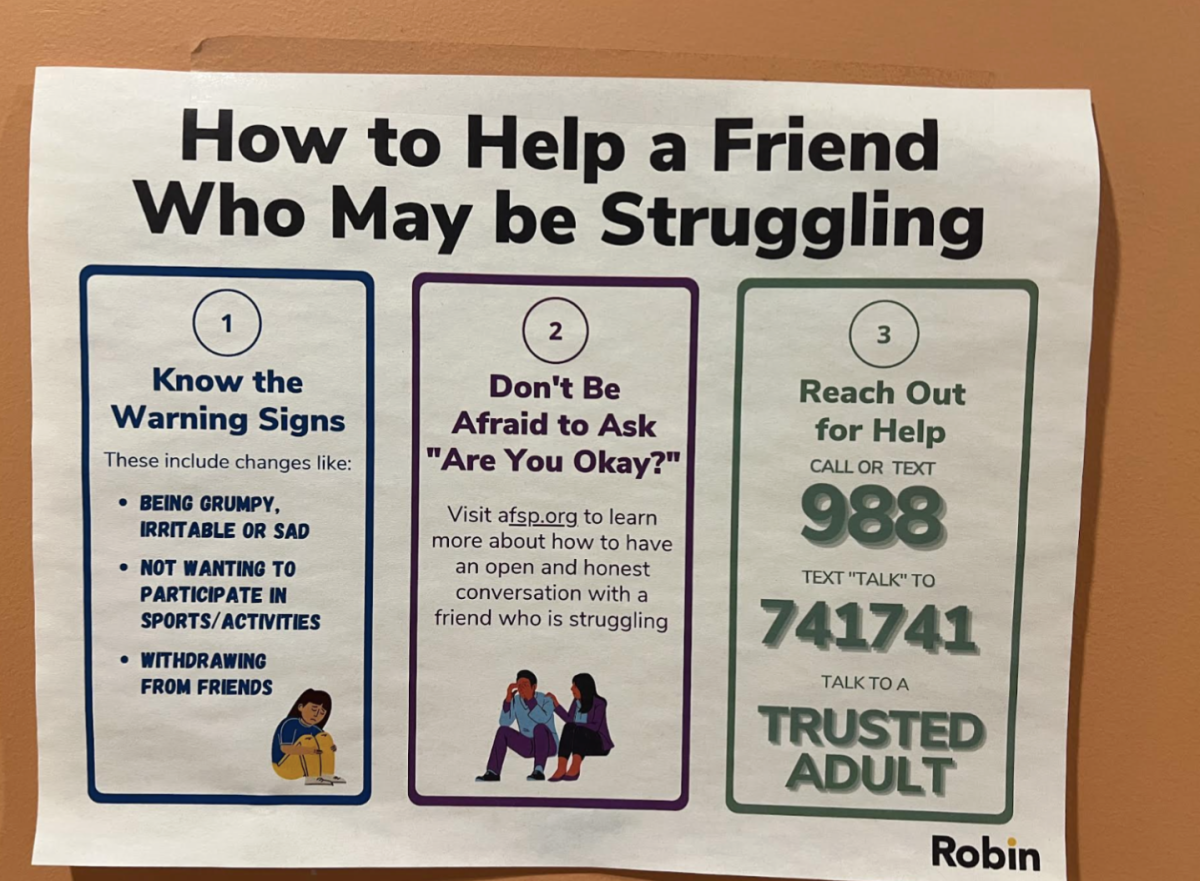
If you are worried about anyone in your life who may be exhibiting signs of violence, help can be found at the 988 hotline.
Your donation will support the student journalists of Wayland High School. Your contribution will allow us to purchase equipment, cover our annual website hosting costs and sponsor admission and traveling costs for the annual JEA journalism convention. Please be aware that the hosting platform retains a 10% processing fee, and donations are not tax-deductible.