

From digging up ancient artifacts in the desert to providing resources to remote villages in the Peruvian jungle, Wayland Middle School social studies teacher Daniel Fernadez-Davila is the closest thing Wayland has to a modern-day Indiana Jones.
Fernandez-Davila was born and raised in Peru, where he studied archeology and anthropology at Pontifical Catholic University in Lima. After graduating, he taught at his alma mater until he met his wife, a science teacher at Concord Carlisle Middle School, and moved to the United States.
Fernandez-Davila’s wife recommended he apply to WMS for a teaching job, and in 2005, he was hired as a seventh-grade social studies teacher for Wayland students.
Since moving to the United States, Fernandez-Davila has made frequent trips back to Peru, leading volunteer expeditions, executing resource drops in remote villages and taking part in archaeological site discoveries.
The idea
After getting to know his students, Fernandez-Davila realized some who had lived in a privileged community their whole lives lacked real-world experience.
“It’s a completely different world from the rest of the planet Earth,” Fernandez-Davila said. “I don’t blame anybody who was born here, they are born inside of the shell.”
Having visited various foreign countries and survived a bombing in his village as an adolescent, Fernandez-Davila’s upbringing gave him perspective on much of the world beyond a wealthy suburb like Wayland.
“Unless you expose [students] to that [type of world], they don’t have any other way to believe that the world is not how they see it every day, where there are peaceful walks, you can leave your bike outside and nobody’s going to drop a bomb on you,” Fernandez-Davila said.
As a modern-world social studies teacher, Fernandez-Davila understood the detrimental effects of living in a bubble and strived to create a solution to this problem by bringing a greater sense of worldly awareness to his students. He’s dedicated to showing his students how people in other countries live, supporting a deeper sense of empathy and understanding.
“The idea was, like, how I’m gonna immerse people from here and give that perspective without having them be afraid of the other,” Fernandez-Davila said.
Fernandez-Davila wasn’t entirely sure how he would pull off the endeavor until he spoke with a fellow volunteer on a delivery mission in Peru, who suggested bringing students on the same expedition they were on. Fernandez-Davila would take his students along Peruvian jungle trails across the Andes Mountains, delivering resources such as school supplies and medical devices to remote mountain villages.
At first, Fernandez-Davila was hesitant to the volunteer’s idea, believing that some children in Wayland did not have the training or capabilities necessary to push through the severe hiking conditions in the Andes mountains.
“My reply was, ‘Are you kidding? They will die. They will die in two seconds,’” Fernandez-Davila said. “Then another [volunteer] says, ‘Well, you should give it a try.’”
(Credit: Shawnie Loveless)
In 2005, Fernandez-Davia decided he would bring a group of adults on the trip to test the volunteer’s idea. According to Fernandez-Davila, the trip went very well, but he was still apprehensive about bringing Wayland students. That changed when two high school students who had previously been in his middle school class approached him and asked if they could join him on an expedition.
Although surprised at first, after thorough background checking and safety planning, Fernandez-Davila agreed to let them come on the trip, and it was a success. Two years later, he had more students and adults join him in another trip, increasing Fernandez-Davila’s confidence that students could not only complete this endeavor, but help in a safe and meaningful way.
Fernandez-Davila’s trips fully took off in 2010, when Wayland parent Antonia Hieronymus started a non-government organization (NGO) that formalized and raised money for his endeavors. Since then, Fernandez-Davila has taken a handful of students from the high school every year to Peru, completing a two-week resource-delivery mission to remote villages in the Andes mountains.
The trip
High school students can contact Fernandez-Davila if they are interested in joining him on a summer expedition. After students are selected for the trip, they fly to Lima shortly after the school year ends and meet up with a ground team in Peru.
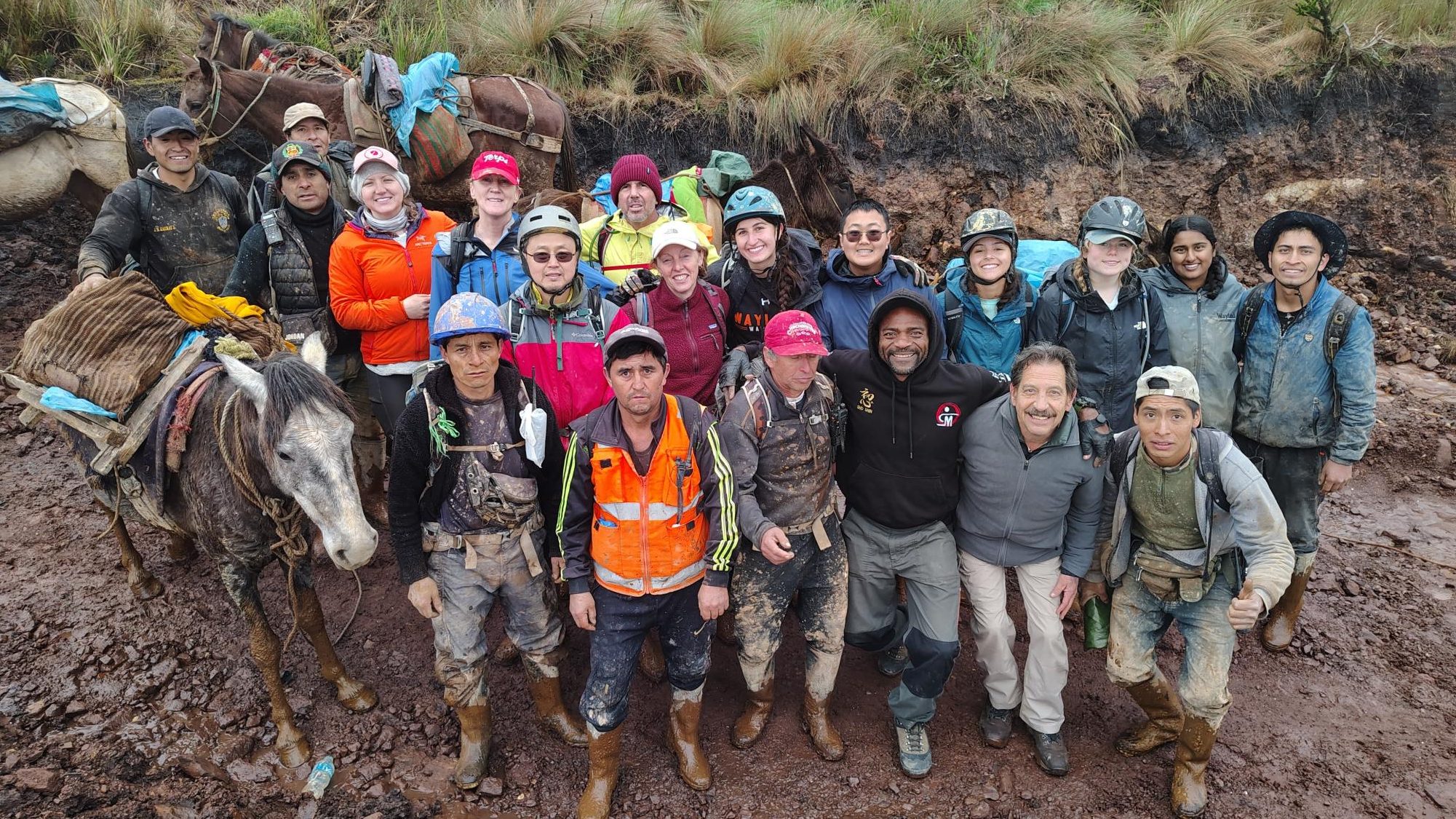
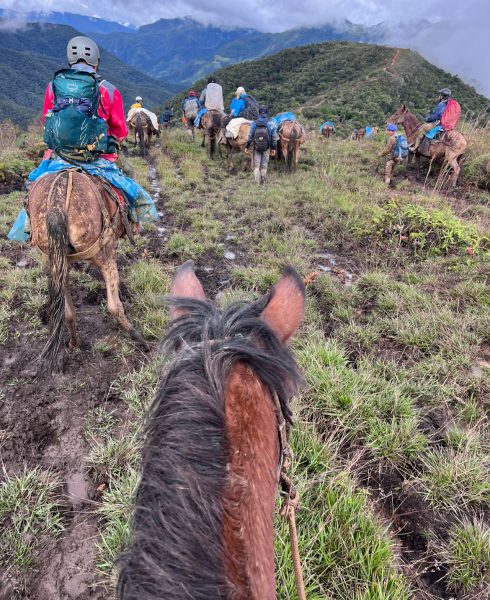
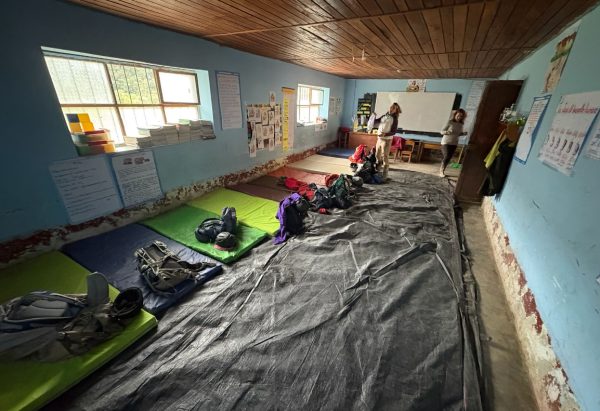
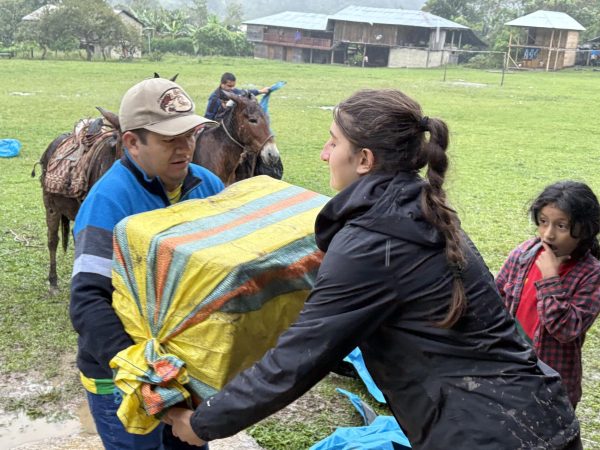
Over the course of three days, the group travels by truck across the Peruvian desert. On the fourth day, they begin a long hike through the Andes Mountains, traveling partly by horse and partly on foot, until they reach the village of Leymebamba. With running water and electricity, the town serves as the group’s base camp.
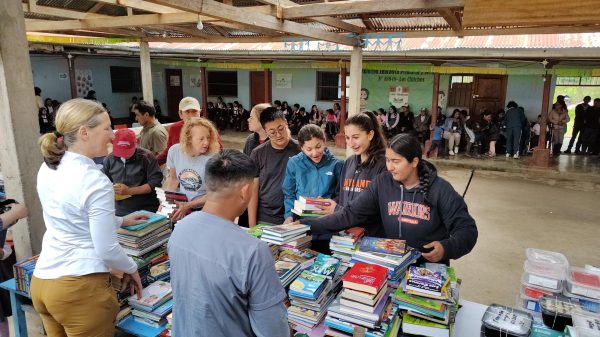
In the following days, the group hikes to more remote villages across the Andes Mountains, delivering medical supplies and educational resources to people in need.
The journey does not come without setbacks, and unexpected challenges can arise on the trail, whether it’s rockslides or getting stuck in the mud. Before the trip, Fernandez-Davila drills his students on the importance of finding mental strength and pushing through obstacles.
“In an expedition, even if you have the master plan, there is only one thing that is guaranteed, and that is that there will be setbacks,” Fernandez-Davila said. “[An expedition] teaches you how to go through problems in life.”
Last summer, Fernandez-Davila and the students experienced some troubles when traveling to Chilchols, a small village 28 kilometers away from Leymebamba. There was 10 hours of hiking through the cliffsides, deep mud and off-trail paths.
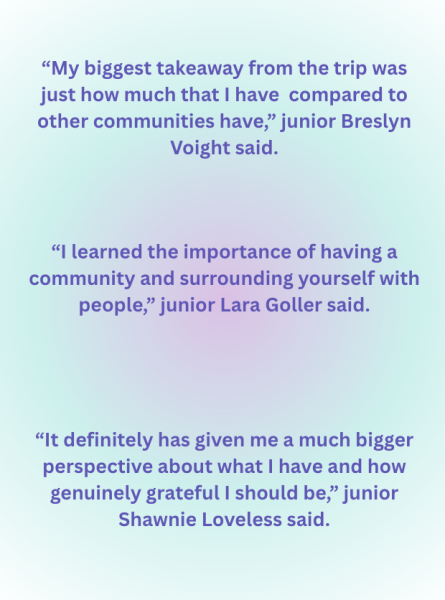
“The hike took a lot of energy,” junior and volunteer on the 2025 Peru trip Breslyn Voight said.
These endeavors were not easy, but all of the students were able to complete the hike successfully. The group successfully delivered medical supplies to a barren medical post within the village, restocking devices such as glucose monitors and thermometers.
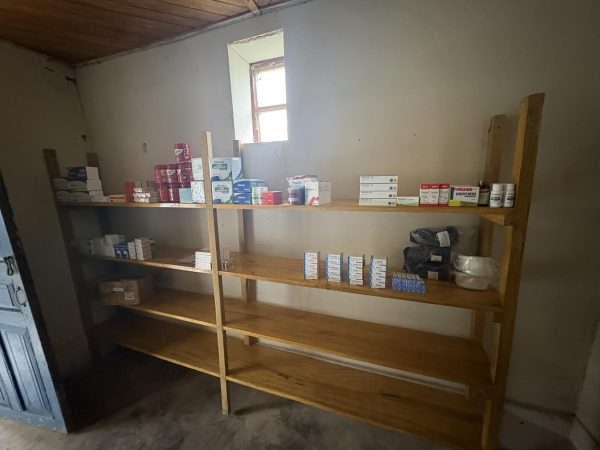
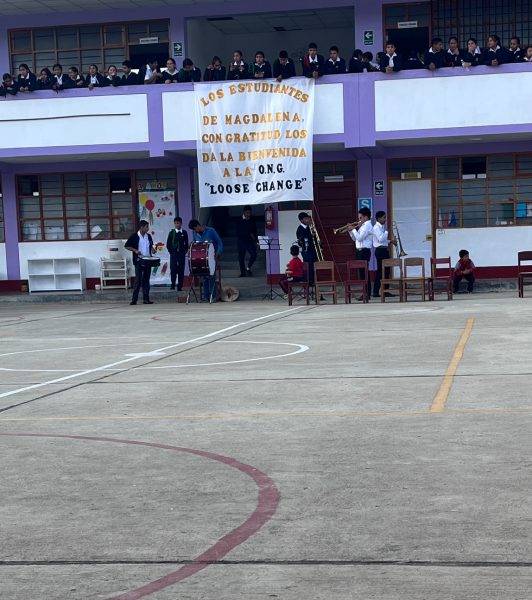
The trip is made possible solely by the non-profit NGO, Loose Change, founded by community member Antonia Hieronymus and run by Meredith Tobe. The organization collects donations to supply the villages Fernandez-Davila and the students visit with needed resources. Last year, the group was able to bring $3,500 worth of medical supplies to people in Chilchols because of donations and fundraising efforts from Loose Change.
“This is huge for Wayland to have a non-government organization [like Loose Change] that operates in the most remote parts of the high jungle of Peru and how little by little members of the community have been involved with us and helped us to grow in what we do,” Fernandez-Davila said.
Beyond delivering crucial resources, students meet and exchange experiences with children in the villages, showing these remote communities that people different from them care and want to help. By emphasizing education and health while sharing their own experiences, students leave a lasting impression on children and adults in the villages.
“We’re bringing in different people that they may have never met before and show that people care about them and want to help them without getting anything in return,” Tobe said. “I hope it makes them feel good, and I hope it gives them more opportunities, whether it’s just figuring out things in their own life or maybe considering going to a slightly bigger village to get more education.”
(Credit: Shawnie Loveless)
The impact
Although the trip can be stressful at times, students learn from these experiences and leave mentally and physically stronger than when they went in. The trip teaches students about perseverance in an environment where pushing through is the only option, a reality that can be relatively unfamiliar to some growing up in Wayland.
“In [Wayland], you have exits where you can give up, so for the first time the only give up zone has abandoned you,” Fernandez-Davila said. “The people are, in some way or another, pushed to their limit, and when they realize that they don’t have all the choice, they open this inner force that they hadn’t discovered in themselves.”
(Credit: Shawnie Loveless)
During the last 15 years of having these trips, Fernandez-Davila has seen first hand how the trip has impacted students and adults’ perseverance and mental strength. A prime example of an adult needing to practice those attributes was Tobe on her first trip with him.
Fernandez-Davila said Tobe’s trip was one of the most challenging, with freezing rain and a route that climbed to 11,000 feet along a mountain path.
By the midpoint of the trip – a small hut in the jungle – Tobe had been injured and was struggling to walk through the pain. She was given the option to turn back early that morning or push through the final stretch to reach the village and deliver supplies. She decided to continue and, slowly and steadily, made it to the destination and back.
Tobe said the decision taught her how strong she was mentally and physically, and that she was capable of doing hard things as long as she kept trying.
“I felt good,” Tobe said. “It just gives you resiliency and really teaches that you can do anything if you go slowly enough.”
Beyond the discovery of personal strength, the trip can also be mentally gratifying for students who get to see the impact of their hard work.
At the end of last summer, a woman in one of the remote villages near Chilchols gave birth prematurely to a 34-week-old baby. Both the woman and her baby were in critical condition and needed to be taken to a medical center, but the Peruvian government declined their request for helicopter transportation.
Fortunately, the medical post that the students had restocked just months before had the necessary medical equipment to save both the mother and her child’s life, and they were able to be transported on foot by villagers to Chilchols to receive the medical help they needed. Both survived, Fernandez-Davila said, because of his and his students’ efforts.
“That baby wouldn’t be alive right now because we were able to drop everything that they needed in that trip,” Fernandez-Davila said. “It’s very simple things that can help these people so much.”
Lasting change
The first hand experiences students leave the trip with help break stereotypes that fuel an “us vs. them” mentality and counter sensationalization in the media. By challenging the idea that different lifestyles are worse or less advanced, the expedition shows that people with different ways of life are not as different as they may seem.
“Once you actually experience that [the style of life in remote villages] yourself, like in one of these villages, it’s basically the same as what we do here,” Tobe said. “It’s not a horrible existence that these people have.”
The combination of perspective, determination and empathy the trip can build supports Fernandez-Davila’s broader goal as a teacher. It promotes greater gratitude for – and understanding of – the resources available in Wayland.
Junior Lara Goller, who went to Peru on last year’s expedition, said seeing the differences between her life and the lives of the students she met inspired her to take action.
Since the summer, she has stayed in contact with doctors and nurses stationed at medical posts in remote villages in the Andes Mountains. She helps organize funding and communicates with the villages about which medical supplies they need most.
“The goal is to get the medical posts what they need,” Goller said. “I learned on the trip how much more there is to do, and there’s so many people in the world that need a lot of help, so I realized I want to make more of an impact.”
Goller is not the only student who has been inspired by these trips to create lasting change. The formative experiences of the trip have left an impact on many, teaching students not only the value of perseverance, but also how they can make a positive impact through hard work and care.
“[The trip] gives you so much grit for everything that you’re going to do and compassion when you put your life in perspective,” Fernandez-Davila said. “It teaches you how to appreciate every single day that you wake up and the things that you have.”