

One third of food produced in the United States goes uneaten every year, with the majority of food ending up in landfills instead of on dinner plates. As climate concerns and food insecurity persist, workers at Spoonfuls saw the high food waste statistics as a call to action.
Spoonfuls recovers surplus food that would otherwise be wasted. It collects unwanted food from more than 120 donors, according to Miller, including grocery stores such as Trader Joe’s, Roche Bros., Wegmans Food Markets and Hannaford, and distributes it to Massachusetts organizations that serve people facing food insecurity.
“We do food recovery, which means we are picking up still perfectly good food that’s getting wasted for one reason or another, and we are distributing that to community organizations,” Miller said. “A lot of our partners are food pantries, but we provide food to meal programs, to after-school programs, to senior centers, to veterans, shelters and a whole range of partner types.”
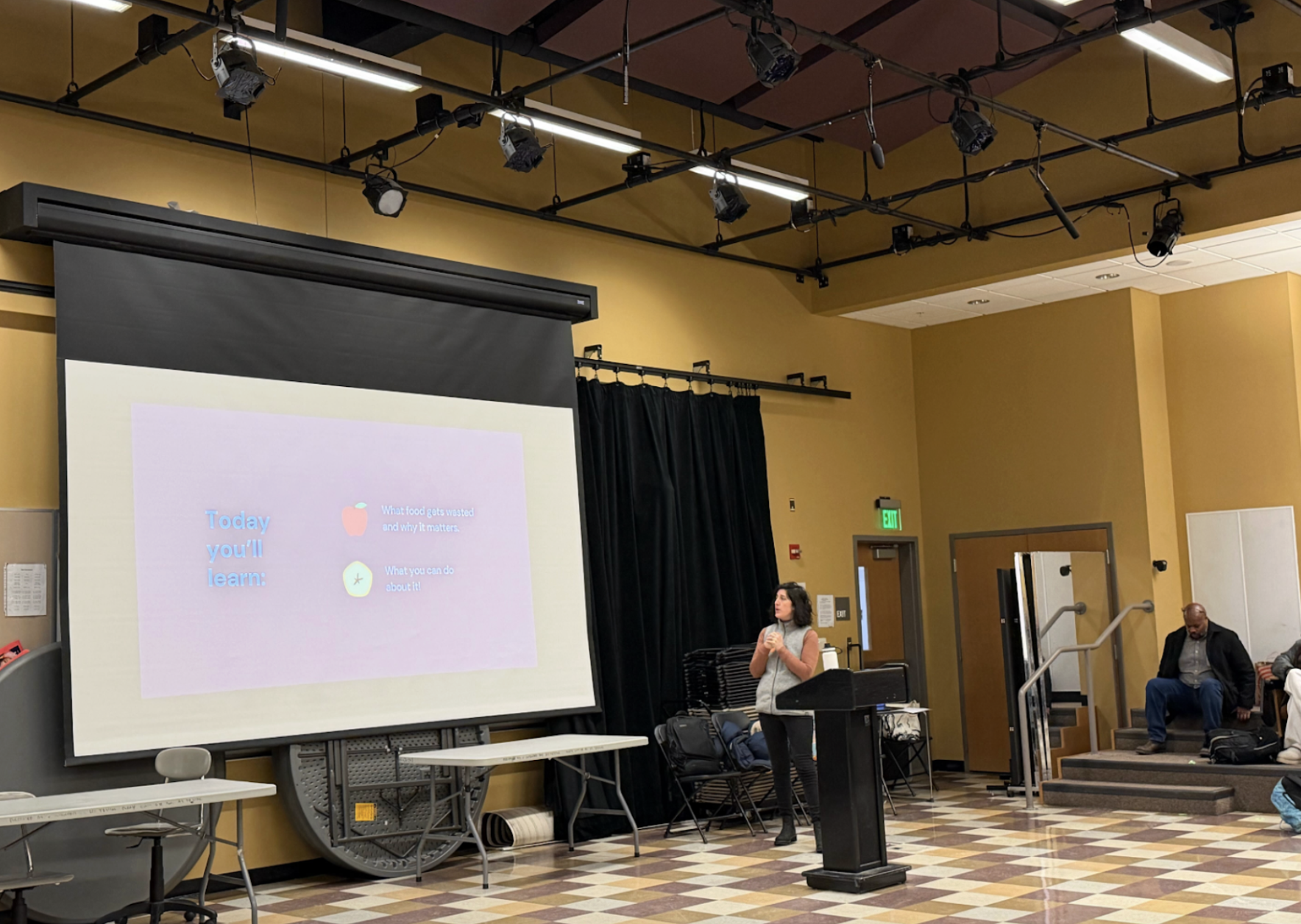
During fifth block on Jan. 29, Miller gave a presentation to students and staff about Spoonfuls and its work.
According to Miller, about one-third of food in the United States goes unsold or uneaten per year, totaling around 133 to 161 billion pounds of discarded meals. In New England alone, Miller said, the region wastes enough food to fill Fenway Park every 11 days.
“Imagine you went to the grocery store and you bought three big bags of food and then you just put one in the trash,” Miller said. “[That’s the] one third of food in the United States [which] is going unsold or uneaten every year.”
Miller added that much of the food waste comes from minor imperfections, such as food nearing its expiration date or produce with irregular shapes.
“You know, [what gets wasted is] funky stuff [or food with imperfections], where there’s nothing wrong with that food, but it doesn’t meet the standards that we all expect,” Miller said. “Stores don’t even wanna put it on the shelf because they just know people aren’t gonna buy it.”
Miller explained that large amounts of food are ending up in landfills. Food makes up about 20 to 25% of landfill waste, making it the largest share of waste in dumps, Miller said. Miller added that about one-third of Massachusetts households face food insecurity.
“When you put those things side by side, it’s kind of absurd that both are happening,” Miller said. “There’s a big impact that we could make there [food insecurity problems] if we stop wasting food.”
Spoonfuls operates in about 100 cities and towns across Massachusetts, delivering food to local communities. Spoonfuls trucks haul 4,000 to 5,000 tons of food per day. Miller said the organization is looking to increase its delivery capacity and expand to more locations.
“There’s room for expansion of our work because there’s such great need as far as food insecurity goes, so we are continuously expanding,” Miller said.
Miller explained that Spoonfuls plans to expand to southeastern Massachusetts in September. Miller also mentioned the organization has additional goals for the future.
“Last year we recovered 6.2 million pounds of food,” Miller said. “In 2026, we expect seven million. That will reach about 500,000 people, which could create 5.6 million meals.”
Miller said a major motivator for Spoonfuls is the potential for growth in food recovery efforts.
“This is why we’re expanding because there’s all this potential,” Miller said. “There’s all this perfectly good food going to waste that could be recovered, and there are a lot of households that could make good use of it right away.”