



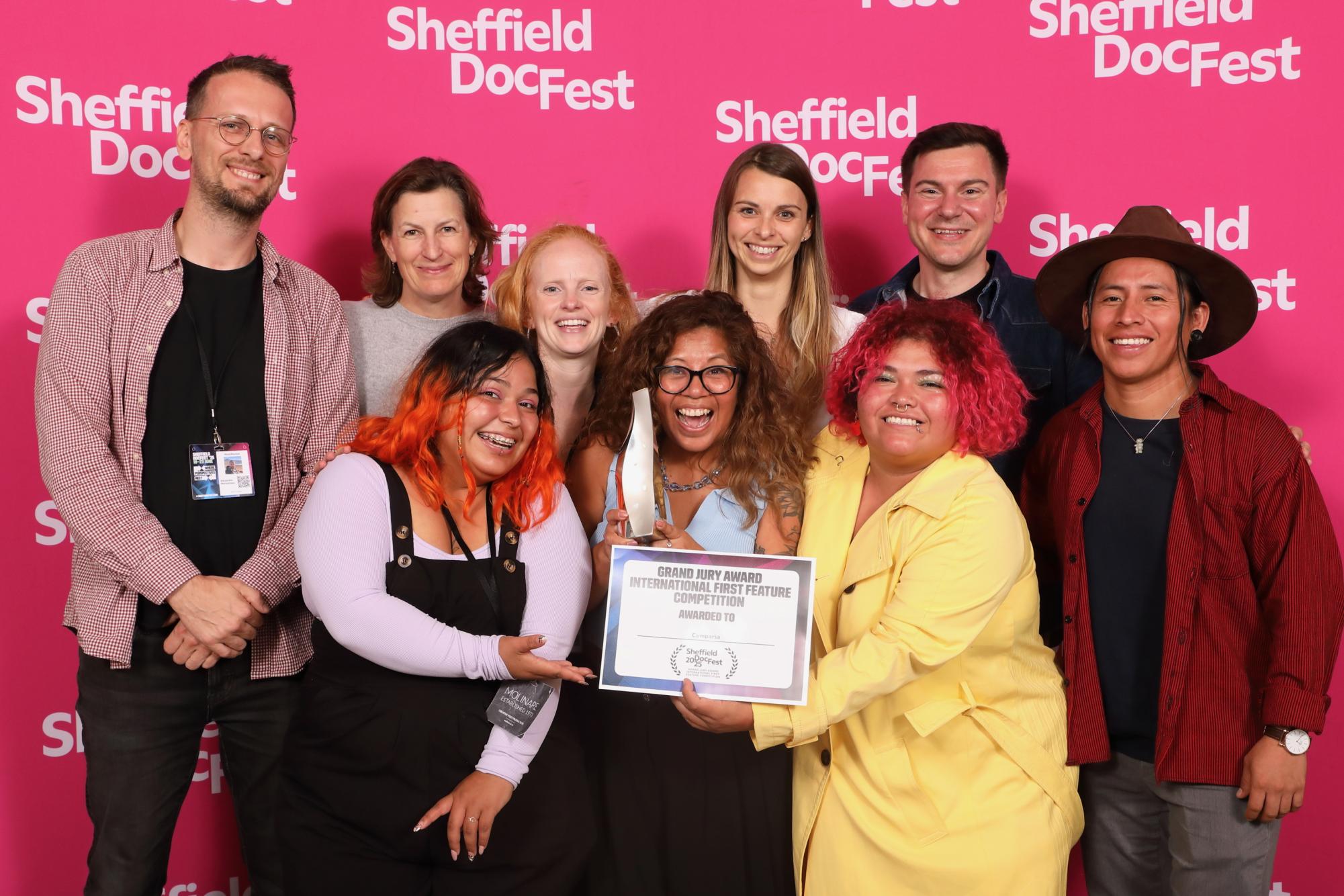
Three Wayland High School alumni reunited years after graduation to film “Comparsa,” a documentary set in Guatemala that was later screened for students during Winter Week.
Doug Anderson, Vickie Curtis and Anna Hadingham, members of the Wayland High School Class of 2003, found their love for storytelling through the WHS Theatre Ensemble (WHSTE). After graduating and going their separate ways, the group reunited 15 years later to film a documentary in Guatemala called “Comparsa.” Curtis and Anderson co-directed “Comparsa,” and Hadingham produced the documentary.
“[The high school theatre program] influenced our ability to construct a well-constructed story because we had a lot of practice at that, in the [theatre] program at Wayland,” Curtis said. “[The program] also influenced us to really question what are the important stories to tell, and “Comparsa” totally fit that bill.”

Theatre and growing up in Wayland
Anderson and Curtis have been friends since kindergarten, meeting at their bus stop. They met Hadingham in Wayland Middle School, and three years later, worked together on theater productions.
During their time at WHS, the theater director was Richard Weingartner. Weingartner played an instrumental part in growing the trio’s love for storytelling, setting them on the path to eventually create an award-winning documentary together.
“Our theater teacher at the time, Weingartner, was a great influence on us,” Anderson said. “We still feel like we invoke him on a regular basis. He taught us a lot about the creative process and it still feels very relevant.”
A typical high school day for the trio would involve finishing their classes at 2:15 p.m. and staying at the high school till 6:00 p.m. to work on shows. During their time with the WHS theater program, Weingartner would allow the group to write and direct their own plays.
“Coming in on the academic side of school, we were being taught to write essays, persuasive writing, like [this] academic style writing, and all of a sudden, having to write for theater is different,” Hadingham said. “[It involved] being able to understand someone else’s perspective, and what their point of view might be, and being able to write for that.
Life after high school
Anderson, Hadingham and Curtis graduated from Wayland, Class of 2003. Both Curtis and Anderson would end up in the film business working on documentaries, while Hadingham went to Guatemala to do service work.
Anderson chose to study physics in college. During his semester abroad in Italy, he studied art history and film studio, never revisiting physics. His adviser noticed that he wasn’t loving physics as much as he loved studying film, so she encouraged him to pursue movie making.
“I expressed that I was interested in film, and she said ‘if you want to make movies, you should make movies’,” Anderson said. “It stuck with me that my physics advisor would be telling me that, [so that] was probably a good word of advice to take.”
After he graduated college, Anderson worked at an internship at the National Public Radio (NPR) station in New York, WNYC. He helped with a show called “On the Media.”
“I had developed some technical experience in sound, so I started to do sound for independent web series that my friends were making and then that became a much easier way to make a living than in the world of public radio producing ,” Anderson said. “I shifted to work more in film, in TV and documentary.”
Curtis started her career as a high school teacher for schools who were a part of the Progressive Education Movement (PEM). PEM centers its curriculum around project based learning. Later, she would go to a theater-based graduate school and work with a member of the Tectonic Theatre Project, a theater technique based on true stories. According to Curtis, this experience would help her go on to work in the documentary world. Curtis is now an Emmy-Award winning filmmaker for “The Social Dilemma.”
“I met documentary filmmakers during the time that I was in grad school that were like, ‘Oh, nobody in documentary film is using this like storytelling mindset’,” Curtis said.
Hadingham went on a pre-acting professional track at Syracuse University. After getting an agent in New York City, Hadingham decided to go work on a service trip in Guatemala. Hadingham then participated in community-based art work, such as doing murals and plays with young people in Guatemala
“I believed that art should be used in service, as a medium, not an end product,” Hadingham said. “I was less interested in doing professional performance myself, even though I love acting, but I wanted to use theater, use performance, use art making as a method to help a community, to help young people have this experience of personal growth and liberation, healing, learning, critical thinking, all these amazing things that are a product of ensemble or ranking with young people, the way they do it in Peronia.”
How filming “Comparsa” began
“Comparsa” follows sisters Lesli and Lupe as they organize a comparsa after a fire killed 41 girls at a state-run safe home. The night before the fire, the girls tried to escape the facility, where they had been abused and sexually assaulted.
“Lesli, Lupe, Marta, and myself, and the other people had a play that I had directed with a group of youth, and we were performing it in unusual places all over the country,” Hadingham said. “And then one of the places we went was the safe home, and we performed it specifically for the girls, and Siona, their friend, came up to us after, and that’s where she asked for help trying to get out of there.”
The girls who tried to escape were caught and locked in a room. Anderson said that when the fire broke out, police and guards did not let the girls out. They died inside. One of the victims was Siona, a close friend of Lesli and Lupe.
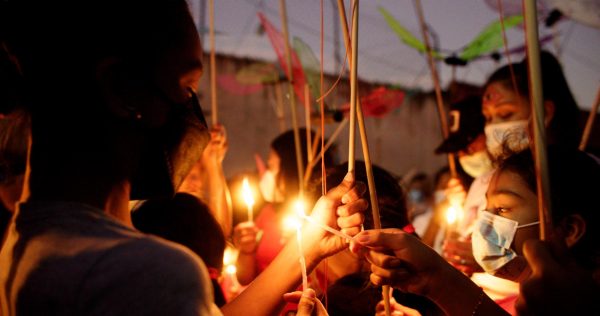
After the government did not respond, the sisters organized a community comparsa, a street performance common in Latin America that includes body art, choreographed dance, singing and drum music.
Curtis and Anderson first heard about the comparsa from Hadingham, who was in Guatemala doing service work. Hadingham volunteered with the nonprofit Safe Passage and met Lesli and Lupe at the Guatemala City garbage dump, where their mother recycled and resold materials such as aluminum, plastic and glass. Lesli and Lupe often went with her.
“Lesli and Lupe, when they were little girls, would go to the dump with their mom,” Hadingham said. “That was the way their family was able to make ends meet.”
Hadingham has known Lesli and Lupe since they were six and seven years old. After visiting Peronia Adolescente, a Ciudad Peronia organization that supports youth well-being through art, she helped secure a grant for the group and worked there for 10 years.
“I met this amazing group of young people in Ciudad Peronia and I started going there in my free time, and I loved the way they incorporated art into the movement for empowering young people, for really building more just and dignified conditions in their community,” Hadingham said.
Over the years, Anderson and Curtis visited Hadingham in Guatemala, and through those visits and Hadingham’s connection with Lesli and Lupe, the idea for a documentary about the comparsa originated.
Filming “Comparsa”
Anderson, Curtis and Hadingham first met to film with Lesli and Lupe in September 2019. During their first week of shooting, they learned a vigil was being held outside the National Palace in Guatemala City to honor the 41 girls killed in the safe home fire. There, members of Peronia Adolescente decided to organize a comparsa.
“We first did a shoot in 2019, and they fell in love with Lesli, Lupe and their family, and the community so that’s where we started,” Hadingham said. “It was a project that was supposed to be just a short film but turned into a much longer project of many years.”
Part of the reason the documentary took so long was the COVID-19 pandemic, which delayed the comparsa and paused filming. The team did not return to Guatemala until 2022, when they made two trips to film most of the documentary.
In 2024, they returned to film pickup shots, which filled gaps in the story and to finish the project. After reviewing about 150 hours of footage, they completed the documentary. Anderson, Curtis and Hadingham said the distance and limited budget were major challenges.
“We were working with a limited budget and we aren’t based in Guatemala, so we were looking to go down at sort of film critical points in the progression of the story so that we’d be able to tell the whole story of the film,” Curtis said.
On Jan. 28th, Anderson returned to WHS for a screening of “Comparsa” in the auditorium. The screening ended with a Q&A moderated by English teacher and Student Council adviser John Keene, who was also Hadingham’s English teacher. The screening was required for students in all grades, which broadened the audience for the film’s messages and themes.
“It was just incredible to show this film to so many young people because the film is about young people,” Anderson said. “I hope there is a universal connection between the young people in the film and young audiences around the world, including Wayland, where I grew up.”
Impact
The film aims to push for change, including expanded access to education and safe spaces for young women. The filmmakers said they are working with Congresswoman Elena Motta, the youngest member of Guatemala’s Congress, to support legislation aimed at improving women’s rights.
“She’s working to try to pass a national use bill to codify some support and improve conditions, access to education, culture, and safe spaces for [young women] in Guatemala,” Hadingham said.
Anderson, Curtis and Hadingham are also using screenings of the film to build support among other Guatemalan officials for the bill.
“We’re trying to persuade [the Guatemalan government officials] and soften them up toward this idea that young people should have access to safe spaces,” Hadingham said. “And that young people, especially young women, need better conditions of protection from abuse and violence.”