

It’s 10 p.m.. You power down your laptop and plug your phone in for the night, finding yourself with the unfamiliar feeling of being alone with your thoughts. As teenagers spend more and more time on their devices, there is a growing worry among some students surrounding their screen time.
According to a survey of WHS students, about 82% think that they spend too much time on their phones or on other devices.
In response to these concerns around screen time, a new trend of screen detox apps has risen.
A variety of productivity apps, like Opal and ScreenZen, have emerged in the past few years, with Opal offering consumers “3 hours back per day,” time that they would have otherwise spent on social media. Drawn in by these marketing tactics, some teenagers have flocked to these apps in hopes of curing their digital addictions. While these apps might have some benefits, there are some significant drawbacks.
Excessive screen use is widely associated with poor effects on mental and physical health, potentially causing lack of sleep, eye damage and higher suicide rates. According to a CDC study, teenagers who averaged more than 4 hours of screen time per day were more likely to have infrequent physical exercise and have inconsistent rest levels.
Many teenagers use social media and the dopamine obtained by scrolling as a way to relieve stress, but constantly juggle frequent notifications, multiple screens and emotional responses. This constant stimulation leads to high cognitive load, which can leave teenagers to be more stressed than they were before.
“When I look at a screen for a long time, I feel really tired,” senior Sophia Nguyen said. “I feel like I’m dissatisfied with what I was seeking out, which may have been gratification or wanting to escape from a stressor.”
Some social media companies are designed like a slot machine, except refreshing your feed takes the place of pulling a lever, and the reward is an amusing video. According to Meta’s Internal Research, Meta knows that many users are addicted to their products and the mechanisms by which they are becoming addicted.
The research also shows clear knowledge of the harms of social media, which include social comparison, body dysmorphia, anxiety and depression. Screen detox apps work to create a barrier to the reward to prevent constant scrolling, but they don’t quiet your brain’s craving for it.
“Meta is finally responding to this overwhelming societal backlash against what they know social media is doing to us, especially our youth,” WHS Counseling Department Head Benjamin Buffa said. “Whether it’s social media or Apple, their whole profit incentive structure is based on keeping kids hooked.”
Without effective screen time limits put on social media consumption by the platforms themselves, productivity apps have become more prominent, raising the question on how these apps actually work.
The survey also showed that among the most popular products that students use is Apple’s default Screen Time feature. Screen Time is built into Apple devices, and gives the user detailed statistics about their daily and weekly screen use. That being said, 87.5% of students who use this default Screen Time feature say it’s not helpful.
“It’s hard for me to imagine that a company beholden to shareholders and motivated by non-profit margins would actually put something into effect that significantly reduced the amount of time that kids are spending on this stuff,” Buffa said.
Screen Time also offers parents a way to get detailed statistics on how much time children are spending on their devices and what they are spending this time on. This, however, is only possible through Family Sharing. Otherwise, parents have to log into their child’s device to view statistics. Parents can also set time limits on certain apps through Family Sharing.
According to the New York Times, parents have found Apple’s tool more complicated and less restrictive since its release.
Screen Time’s ineffectiveness has led to some parents and kids looking for alternatives. Nguyen uses Leechblock, a Chrome extension that blocks specific websites at the chosen times.
“I think it helped a lot with my sleep schedule, since I also have ADHD, so whenever I get sucked into something, I get very hyper fixated and it kind of goes on for hours,” Nguyen said. “So I’ll get a lot of sleep because I’m able to use [Leechblock].”
However, according to Nguyen, a drawback is that the extension blocks the whole site, which can impair the communication functions and other benefits of social media platforms.
“Some people use Instagram for clubs when they’re messaging each other, and I know the crew team also has a Facebook that people use to communicate,” Nguyen said.
According to the survey, among the most popular apps used by other students is the platform Opal, a mobile app that blocks other apps when prompted. Users can schedule “focus sessions” that temporarily lock them out of certain apps. Opal also attempts to gamify the experience by rewarding users with “focus streaks”, which are different milestones that can be displayed on users’ profiles. Additionally, users can compete with their friends and compare streaks, daily screen time and see themselves on a leaderboard.
“So my two thoughts are, that [gamified focus apps] strike me as something that I love, and the cynic in me is also kind of coming out a little bit,” Buffa said. “Is this just another wolf in sheep’s clothing, where it’s looking like something that’s helpful, but in reality, they’re just trying to draw more kids to that platform?”
These hard-block apps can be effective in the short term, but they can also cause withdrawal for more screen-dependent individuals who find workarounds, such as removing the limits they set for themselves or deleting the app entirely, and erase the long-term effectiveness.
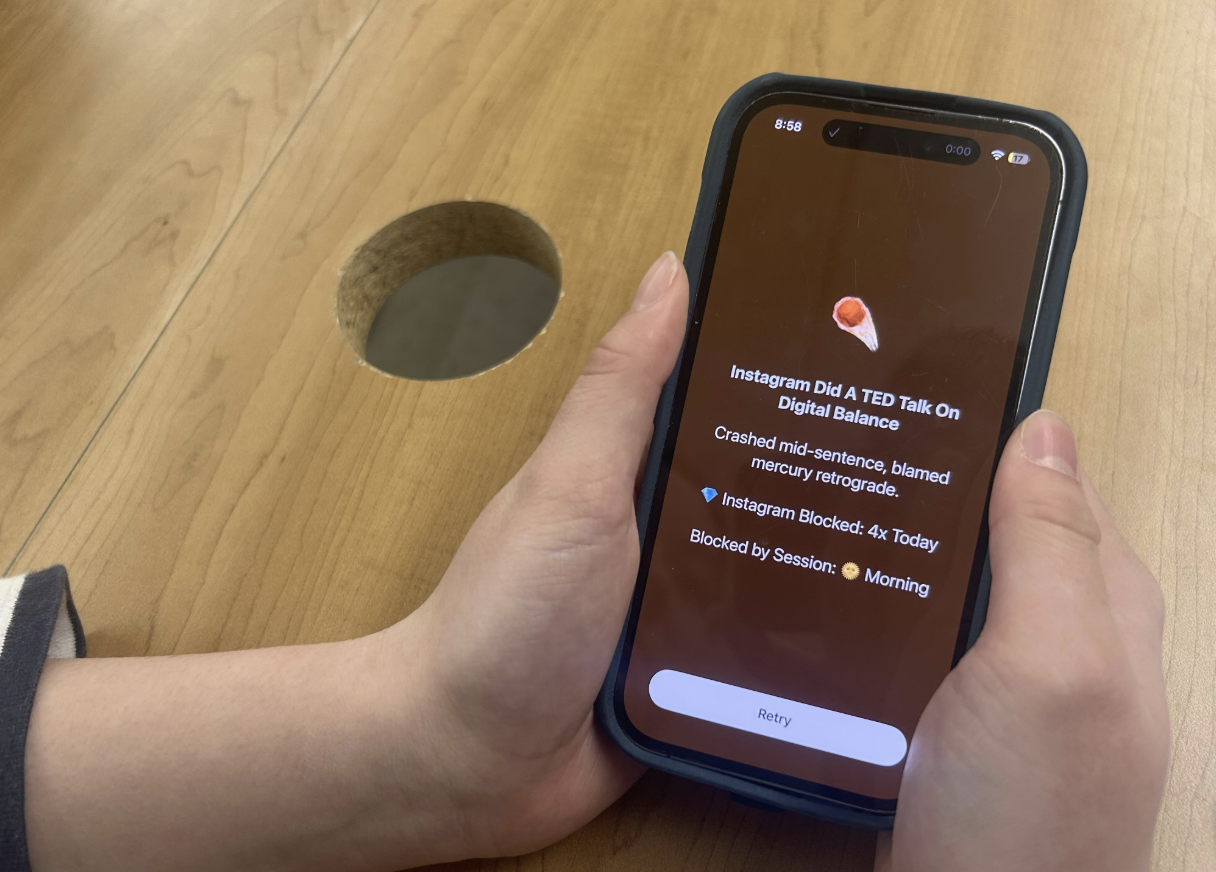
Another frequently used app is One Sec, a program that displays a 10 second animation when you open a distracting app. It can make you do breathing exercises, force you to look in your own eyes or chat with a “One Sec polar bear” that asks you why you want to open that app. It aims to break the action of scrolling on autopilot and forces users to think before they open the app.
A 2023 study by the Proceedings of the National Academy of Sciences (PNAS) found that One Sec reduced app usage by an average of 57%. However, One Sec is hidden behind a paywall of $19.99 per year to be able to “protect” an unlimited amount of apps. The free version has a limit of one app only.
Although focus apps can be effective for some, in the end, the ultimate solution may be when the user decides the world outside the screen is more interesting than the world inside. Developing fun interests, trying new experiences or picking up a new hobby could be the key to reducing social media use. For example, according to researchers at CQUniversity Australia, participants immersing themselves in board games showed much lower levels of stress and anxiety.
“I absolutely do think [that] the extra time [I have] I get to use really productively and I get to pick up a lot of hobbies,” Nguyen said. “I love painting and I love playing guitar, and those are things I’ve moved my time over to instead of using social media.”