



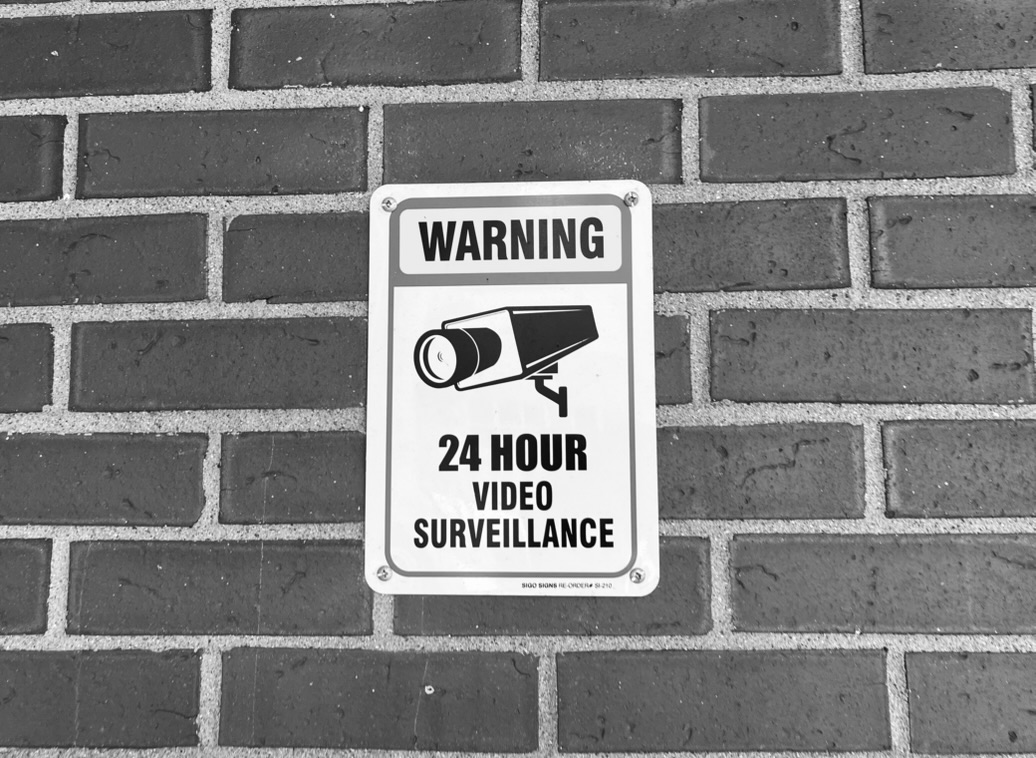
“Big Brother is watching you.”
In his book 1984, George Orwell created a society in which citizens are constantly watched by the figure, “Big Brother.” With modern-day technologies like Ring cameras, home smart speakers and AI glasses that contain miniature cameras, there is some concern and paranoia over how much of a person’s private life is being surveyed.
“What Orwell failed to predict is that we’d buy the cameras ourselves, and that our biggest fear would be that nobody was watching,” comic Keith Lowell Jenson tweeted in a viral comment several years ago.
Ever since the rise of the internet in the 1990s, many people’s lives have evolved and adapted to be almost entirely dependent on modern-day digital technology, with 98% of Americans owning a cellphone of some kind. Whether it is phones, television, computers, cameras or microphones, these technologies have become normalized as a part of modern life. This normalcy of surveillance can potentially put a veil over security issues.
“I don’t think that kids who have grown up with [digital technology], [where] it’s been a part of their daily lives, [are] pondering the privacy aspect that much when they’re using it more than adults are,” psychology teacher David Schmirer said.
With certain technologies being used daily, some people might not consider the possibility that these devices could be surveillance technology that harvests more personal data than necessary. Social media, for example, used by up to 95% of teenagers within the U.S., works to monitor a user’s engagement in order to curate a more personal experience.
“[Social media platforms] create a list of things that you’re interested in in their databases,” junior and Genius Bar Student Leader Brendan McGonegal said. “They know what each individual person is interested in, and they also have models to predict. If you’re interested in sports, you’re gonna like these types of posts more.”
According to the Federal Trade Commission (FTC), websites and apps have various methods to collect data. Some data tracking mechanisms, like cookies or pixels, can continue to identify a person after they leave the site. Some websites can directly track their users in the process of “first-party tracking”, while others sell user data to external sites and companies through “third-party tracking.”
“[Data tracking] is definitely a privacy concern, at least for me personally, because they’re collecting massive amounts of data, and often connect it to your name [and] location,” McGonegal said.
In the recent district court case Lopez v. Apple, the multinational technology company Apple agreed to a $95 million settlement over allegations that Siri, a commonly used voice assistant, had been recording and eavesdropping on private conversations. This case is an example of how lawsuits such as this can expose the complex trade-off between efficiency and security in modern technology and reveal itself as a threat to privacy.
“It’s all within your control,” McGonegal said. “And, of course, if you buy one of these devices, that’s a trade-off. If you want that convenience, you could take it for that privacy concern.”
While concerns already existed around surveillance technology amidst websites and apps, recent technology that harnesses the power of artificial intelligence (AI) seems to evoke even more apprehension. This apprehension is further noted as AI is used to collect and monitor data.
“[With] government and businesses that have the ability to surveil, [you] never know when a government’s going to be willing to increase the amount of spying activity that they’re engaging in with their citizens,” Schmirer said. “They pretty much have all of the technology in place to do that very easily, which, I’m not saying that it’s being done, but I’m saying that that power is there.”
The doorbell camera company Ring stirred fear around this kind of surveillance in their advertisement presented during this year’s Super Bowl, leaving some people wary of the regulations surrounding AI technologies. The commercial depicted the usage of the camera’s new “Search Party” feature, which uses AI and images from the camera in multiple homes in order to track and find missing pets. Some people were concerned about the idea of home cameras being capable of potentially invasive surveillance, and raised questions about ethics and capabilities around this technology.
“I think the Super Bowl ad was a great example of people kind of getting a punch in the face, saying, ‘oh, this could be used in ways that I didn’t necessarily think of’,” Schmirer said.
Similarly, Meta AI glasses have left some people concerned over the possibility of their private lives being secretly recorded, with the glasses including a miniature camera. Some are particularly worried about the potential outcome of these glasses encouraging and “arming” sexual predators by facilitating the recording of people without their knowledge or consent.
“I just think the concept [of recording glasses] in itself is so weird,” senior Fiona White said. “Just like recording someone [without] their knowledge or consent [in] like a secret hidden camera.”
Where people are concerned about surveillance technology, educational administration can be left stuck finding the balance between privacy and safety at schools. Wayland High School has various measures put into place to ensure safety, including security cameras and adult supervision.
Unlike in large corporations, where data collection is generally unknown, students may feel more protected with their data in school settings. Even with the school-issued computers monitored, the specific knowledge of where, how and why students are being supervised during school is what can allow students to feel protected, rather than watched.
“It is not about ‘let us intrude on folks’ privacy and private lives’,” WHS principal Allyson Mizoguchi said. “For me, it’s about, ‘how do we make sure that we have enough surveillance or supervision so that we can teach kids if they’re not being safe?’”
Mizoguchi also notes that surveillance cameras and other privacy measures are not implemented lightly at WHS. There are teams that regularly meet to discuss what is necessary in terms of safety versus what might violate a student’s privacy.
“There’s a balance here,” Mizoguchi said. “A school should be a place where students can freely express themselves, can learn and grow [and] make mistakes [to] grow into their best selves. It also needs to be safe and secure and so, in our world, given safety concerns we need to be realistic.”
Similarly, with the school-issued computers being completely monitored by the administration, other measures can be put into place to prevent the tracking and data collection that could occur on personal devices. The WHS tech department has contracts that include what various companies can and cannot do with student data, such as selling the student data to third parties, according to instructional technology specialist Marc Lefebvre.
“[The tech department] tries our best to control [data collection], through a student data privacy consortium that has contracts with companies that take student data,” Lefebvre said. “We spend a lot of time maintaining those contracts and making sure all the software we work with conforms to those contracts.”
In spite of various concerns and apprehension regarding certain use of surveillance technology, this doesn’t stop the majority of people who continue to use these devices and software on a daily basis, especially with social media using specific algorithms to steal people’s attention away.
It can be tricky to navigate the risk-reward trade-off when it comes to technological security. Education and awareness around how online platforms use information can be vital tools in keeping one’s private life private on the internet. However, the dependency on these new technologies has only grown over recent years. With algorithms monitoring data and Google searches being used to train AI, it’s important that people remain cautious with technology and what the data they are sharing could be potentially used for.
“I think a healthy dose of skepticism when it comes to surveillance, when it comes to privacy [and] when it comes to AI is essential,” Schmirer said. “You don’t want to go full “old man” and just say ‘it’s all terrible, it’s all bad and don’t use any of it’. It’s here, and it’s a reality, but just like with anything else in life, I think students should be skeptical of its breadth and of its ability to be used.”