
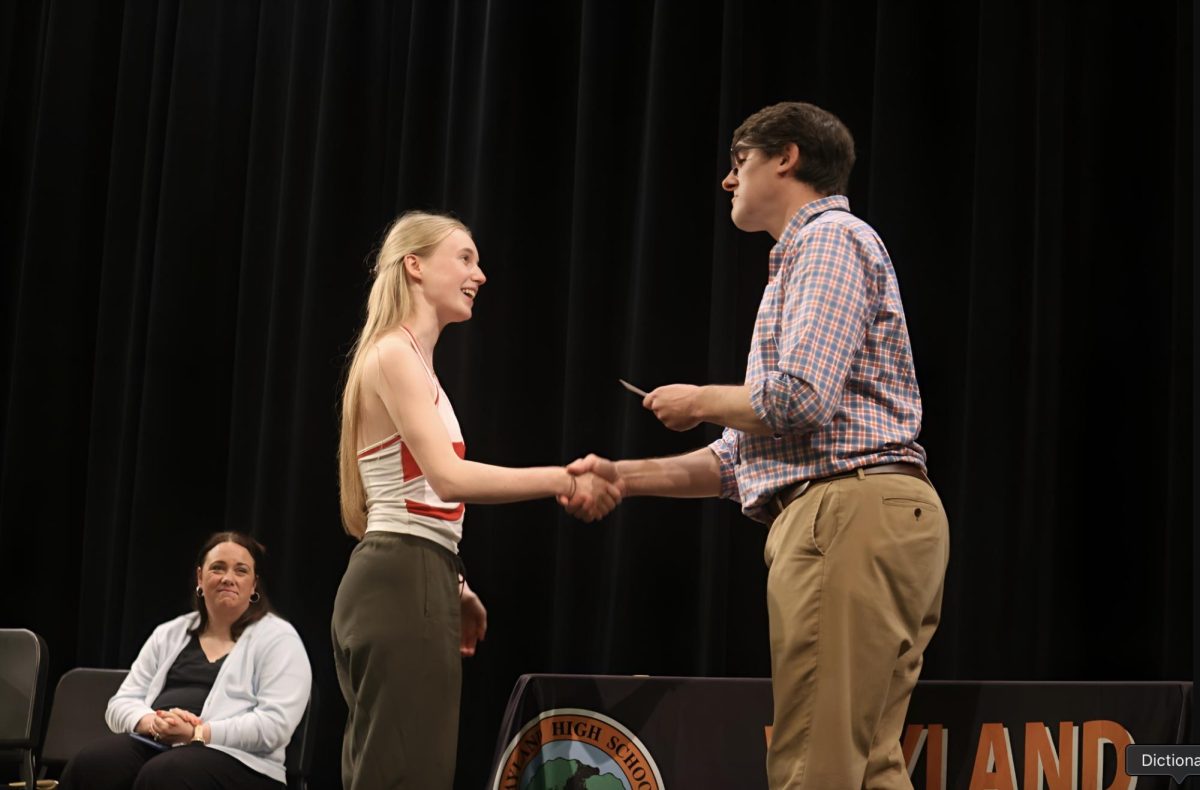

![Wayland Historical Society Executive Director Scarlett Hoey explains the history of the Cochituate Gatehouse.
"The exterior is still a nice monument to remember buildings [involved in] water history," Hoey said. "We all drink lots of water, and it's such an important resource that we kind of take for granted nowadays."](https://waylandstudentpress.com/wp-content/uploads/2026/06/IMG_2024-1200x800.jpg)










The town of Wayland is often associated with being affluent, meaning financial struggle can be overlooked. Behind it all, some residents face rising rent, utilities and medical costs as well as other surprise expenses, which can be hard to cover alone. For these residents, the Wayland Community Fund (WCF) offers anonymous assistance when members of the community are faced with these moments of need.
The fund’s main goal is to assist residents with basic necessities and surprise costs. This includes rent and utilities costs, medical and dental expenses, child care bills and simple transportation fees. Even though Wayland is known for financial comfort, the community fund staff note that this assumption is not representative of everyone in the town.
“Wayland is a fairly well off town, and so it’s not typical here for people to not be able to afford basic necessities,” WCF Board Head Lynn Dowd said. “Wayland may seem financially comfortable, but there is a part of the community many people do not see.”
For roughly 20 years, Dowd has been involved with the WCF. She began working with the program as a clinician for the Youth and Family Services Department, where she helped families who need assistance connect with the fund. Back then, the fund was managed by the town and overseen through a trust. It is now managed as a non profit 501(c)(3). When the supervisor was stepping down, Dowd stepped up.
“I was asked to be on that committee when my supervisor wanted to step down,” Dowd said. “I started to attend the meetings and learn the process, and it brought me in touch with a part of the community that I really hadn’t known.”
The board members began working with the elderly, disabled and subsidized housing residents. According to Dowd, many of the referrals to the fund come through town organizations like the Housing Authority and the Council on Aging (COA).
According to the COA outreach coordinator Maura Snyder, many of the residents she refers to the fund have common expenses of surprise medical and dental bills or housing costs such as repairs and raising living expenses.
One of the most important aspects of the fund is the preservation of confidentiality. Their goal is to make sure residents don’t feel embarrassed or nervous to reach out. According to Dowd, keeping the requests private lets people feel safer when asking for assistance.
One of the reasons the fund moved towards becoming an official non-profit was to protect privacy. If they had remained fully managed by the town, any financial requests would have to pass through a more public process. Becoming a non profit let the fund continue to protect the identities of residents requesting money.
“If we did not observe [confidentiality] carefully and make sure they knew we were observing it carefully, you would have a much smaller volume of requests,” Dowd said.
There has been a rising demand for the community fund in recent years. According to Dowd, the donations to the fund increased when the COVID-19 pandemic began but have since dropped off. This has caused the board to be more careful about how much assistance they give, especially with rising living costs.
“We had a generous outpouring in the beginning of COVID that was wonderful, and since that time, donations have fallen off, and cost of living has increased,” Dowd said.
For senior citizens, this rise in the cost of living is especially difficult, which according to Snyder is especially prevalent with the fixed income that Wayland’s older residents rely on.
“Many seniors have fixed incomes that may not be keeping pace with inflation,” Snyder said. “The general cost of living in MetroWest is high, and if your income from Social Security or a pension is not keeping pace, that can be a large financial strain.”
The fund has worked with more local organizations like The Villa, and the new Dunkin’ location to increase fundraising. Beyond giving money to residents, the fund also forms trust and connections with residents. Some residents simply need help applying, and others need help filling out forms or explaining the situation they’re in.
“Building trust and connection is an intricate part to what the COA and WCF does,” Snyder said. “I find it is helpful to be upfront with people about what I can help with, sometimes I meet people during difficult times in their lives but I have learned that directness, in a compassionate way, builds that trust.”
Financial struggles are not always visible in a town like Wayland, and both Dowd and Snyder both point out that hardship can hit anyone. Whether it be an unexpected bill, a medical problem or loss of a job and income, people in Wayland are not immune to financial problems, making the work of the community fund crucial to a more inclusive town.
“I’m thankful to live in a town that has a community fund to help residents with urgent needs,” WCF Board member Jodi Chase said. “Most people are surprised to find that so many of our neighbors face financial hardships when it comes to fulfilling basic needs such as rent, heat and food. Wayland Community Fund can help ease some of these hardships very quickly and efficiently.”
Jodi • Jun 10, 2026 at 1:56 PM
Thank you WSPN for highlighting such an important part of our community. This article will hopefully make people aware that it exists and also inspire people to donate.