

![Wayland Historical Society Executive Director Scarlett Hoey explains the history of the Cochituate Gatehouse.
"The exterior is still a nice monument to remember buildings [involved in] water history," Hoey said. "We all drink lots of water, and it's such an important resource that we kind of take for granted nowadays."](https://waylandstudentpress.com/wp-content/uploads/2026/06/IMG_2024-1200x800.jpg)




















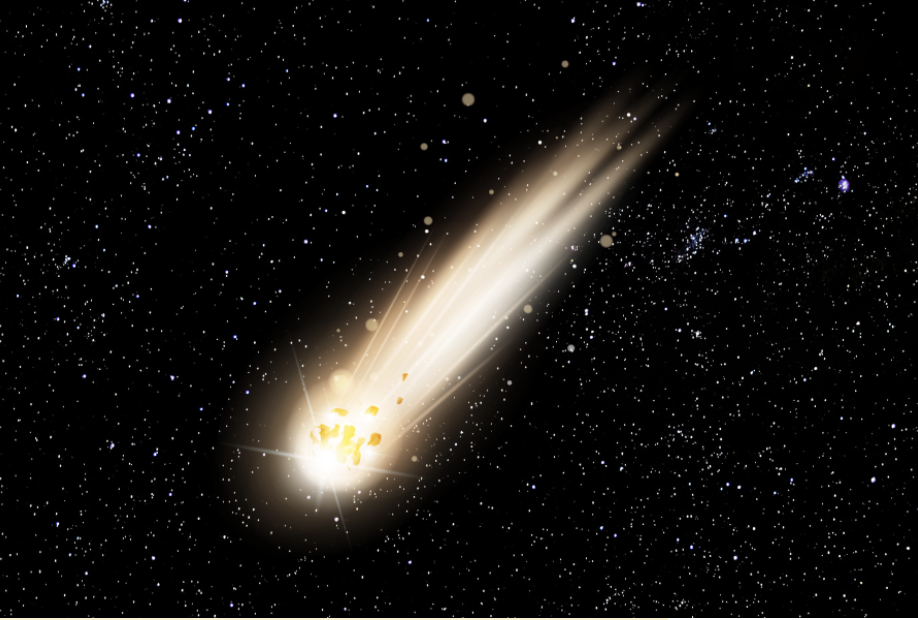
A loud boom was heard all across Massachusetts on Saturday, May 30. Was it a tree? Was it a car crash? Is it the end of the world? Nope, it was a meteor. At 2:11 p.m. on that Saturday, a meteor entered the atmosphere and exploded off the coast of Massachusetts creating a sonic boom that was heard across the Northeast.
The meteor was five feet in diameter and entered Earth’s atmosphere at around 420,000 miles per hour, according to a statement released by the National Aeronautics and Space Administration (NASA). When the meteor reached 31 miles in the air, the meteor exploded, thus releasing energy equivalent to 230 tons of TNT.
The meteorite fell into Cape Cod Bay, 56 miles from Boston. The explosion was heard all around Boston. Not only was it heard in Massachusetts, but it was heard all the way to Johnston, RI.
“I was driving back from my haircut with my mom [when I first heard the meteor],” Wayland High School sophomore Max Ulep said. “I thought the car behind us hit our bumper. I was like ‘wow this is [like the] end of the world.”
Meteors often travel faster than the speed of sound. While most meteors burn up once they reach the atmosphere, occasionally a meteor will rip through the air and build up pressure. When mixed with heat and friction, it creates a sonic boom.
“Meteors typically come in at supersonic speeds,” WHS astronomy teacher Kenneth Rideout said. “Most are small and burn up high in the atmosphere so we don’t hear the boom, [but] this one came all the way down and blew up so it was a double whammy in that way.”
Meteors are not traditionally seen as a big threat to Earth’s existence. However it is good to be wary and aware of them according to Rideout.
“If [a] meteor is big enough, it will reach the ground, [but] a rock this size is statistically unlikely to hit you or your house,” Rideout said. “The real problems are the big ones, [and] the good news is that big ones are rare and NASA is looking for them all the time. [The] meteor is a good reminder to all of us how fragile our existence is in the universe.”