![Wayland Historical Society Executive Director Scarlett Hoey explains the history of the Cochituate Gatehouse.
"The exterior is still a nice monument to remember buildings [involved in] water history," Hoey said. "We all drink lots of water, and it's such an important resource that we kind of take for granted nowadays."](https://waylandstudentpress.com/wp-content/uploads/2026/06/IMG_2024-1200x800.jpg)







As the 2025-2026 school year reaches the halfway point of the first semester, a certain Wayland High School club is making a comeback. This year, the WHS literary arts magazine, now known as The Willow, returns after nearly two decades.
A literary arts magazine is a publication that focuses on art such as poetry, stories, essays, drawings, paintings and more. This type of magazine allows a space for artists to showcase their work.
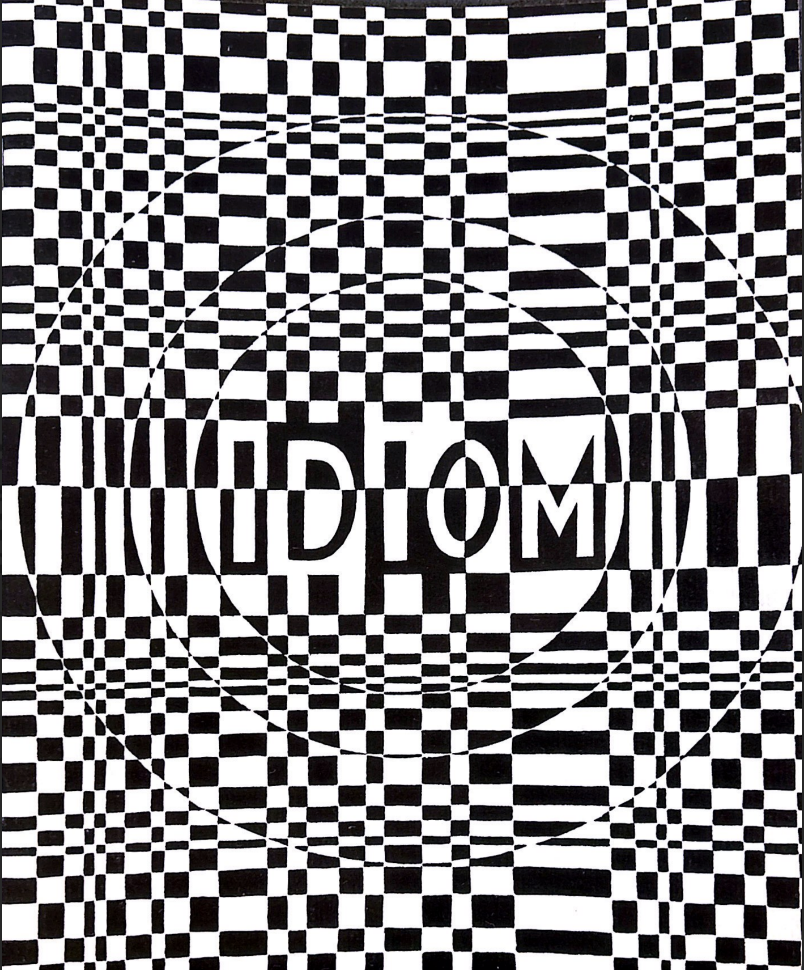
Previously, WHS had a literary arts magazine that ran for years. While the exact founding date is unclear, the WHS library holds numerous past issues from different eras. The oldest edition is a magazine from 1966, titled The Idiom. The most recent issue on file is from 2006. The library has no copies after that year.
“Spring of 2006, maybe 2007, that’s the last memory I have of any kind of literary magazine coming out,” WHS English teacher and The Willow advisor Peter Galalis said.
Peggy Wang, a former WHS literary magazine staff member, worked on the 2006 issues when the magazine was titled Chutzpah. Wang said the staff met on the top floor of the old arts building.
“We just all gathered in the room, and we just read over [people’s work] and gave our thoughts on it,” Wang said.
During the Chutzpah era, only Wayland students—not staff members or nonstudent Wayland community members—submitted work for the magazine. Their pieces appeared in a print version for everyone to read.
“I think [in the magazine] there was a mix of poetry, people’s essays, thoughts on things [and] reflections,” Wang said.
The literary arts magazine at WHS let students create their own art-style pieces and share them with the community. Wang said the magazine brought a sense of freedom for students to be creative.
“I feel like everyone was like ‘It’s nice reading Shakesphere and the Odyssey,’” Wang said. “But where’s that space for us to also write in a creative way, and [the literary arts magazine] was a really great chance to share peoples’ work.”
According to Wang, the magazine gave students a break from their schoolwork, bringing arts into an otherwise academic routine.
“We have to remember that we are also human beings with a whole internal world, and we want to share ideas we have,” Wang said. “I really felt and still do feel strongly that creative writing and creative avenues are really important for young people in general to be engaged in, [and] I think it’s a really special thing to give space for that.”
This year, WHS junior Ainsley Jay revived the literary arts magazine for the school community. Jay was inspired to start The Willow after seeing other literary arts magazines at a journalism convention. Later, she noticed other teens running their own literary arts magazines on Instagram. Intrigued by the possibility of starting her own magazine, Jay said her parents encouraged her to pursue the idea.
“I thought, you know, that’s so great that they’re really creating this place where artists and writers to come together and publish their work,” Jay said.
Part of starting a literary arts magazine at WHS meant finding advisors who would be willing and ready to help out. Jay was able to find Galalis and WHS English teacher Sara Snow. The advisors serve as mentors Jay can share ideas with and who guide the magazine’s projects.
“We’re really thrilled Ainsley is taking the reins on this one,” Snow said. “I believe passionately, as an English teacher, that we should have a literary arts magazine.”
The next step in starting The Willow was recruiting members to join the publication. By promoting the club at the WHS fair, through email and by word of mouth, Jay enlisted three editors-in-chief, including herself, along with three junior editors-in-chief and nine editors. Each editor-in-chief has a different focus: Jay oversees writing, junior Shubha Iyer leads art and junior Cordia Wang manages multimedia. The nine editors are divided into sections such as multimedia, art, design, writing and social media.
“To create the editorial board, I looked around at other literature magazines to see what other editorial positions they have,” Jay said. “A lot of editors are expected to network and raise awareness about the magazine to get people to submit stuff.”
The editors decide which pieces are published in The Willow, design layouts and help refine and manage submissions. The EICs oversee their sections and coordinate the rest of the editorial board.
“The [EICs] oversee the whole entire publication,” Jay said. “They should really be taking on most of the responsibility and doing most of the work.”
The main reason Jay started the literary arts magazine was to bring more art opportunities to WHS. She wanted a place where people can publish their work and explore their creative side. The magazine also gives the Wayland community a place to appreciate the arts.
“We have so many high achieving students who put themselves into so much pressure to hold themselves to high standards,” Galalis said. “I think acknowledging that there is a whole other side to student life that comes out in music and visual art and photography and poetry and fiction is really powerful, and I think a student publication that celebrates that is really important.”
The name for the magazine, The Willow, was pitched by Galalis. Back before WHS was remodeled in 2012, there was a willow tree in the back of the building. When the new school was built, the town went to great lengths to preserve the willow tree. However, the willow tree fell as a result of a huge storm. Now, the WHS logo has a willow tree embedded into it. So, Galalis pitched The Willow as a way to incorporate something important in WHS history within the magazine.
“For me, a literary magazine called The Willow suggests a place where somebody might sit down and read a good book, write a poem or draw a picture and be sheltered,” Galalis said. “That’s what I hope an arts magazine can do for a high school.”
To share a form of art, such as a poem, picture, music or short story, with The Willow, students must submit their work in a layout that the magazine provides. WHS students are encouraged to send in their writing as well.
“When you get something published and you have a larger audience, I think it becomes much more meaningful,” Snow said.
For the near future, Jay hopes to publish the first issue in December or January. The Willow plans to publish both in print and online.
“I think the important thing that I try to remind myself is that this is the first time in a while that it’s happening, so a lot of it is just trial [and] error,” Jay said.
Overall, Jay is hopeful in finding an audience among both students and parents for future years.
“I want to show that [the arts and humanities] are still noble, that there is a place for arts in our school and that [the arts] provide a lot of meaning to your academic life,” Jay said.