![Wayland Historical Society Executive Director Scarlett Hoey explains the history of the Cochituate Gatehouse.
"The exterior is still a nice monument to remember buildings [involved in] water history," Hoey said. "We all drink lots of water, and it's such an important resource that we kind of take for granted nowadays."](https://waylandstudentpress.com/wp-content/uploads/2026/06/IMG_2024-1200x800.jpg)










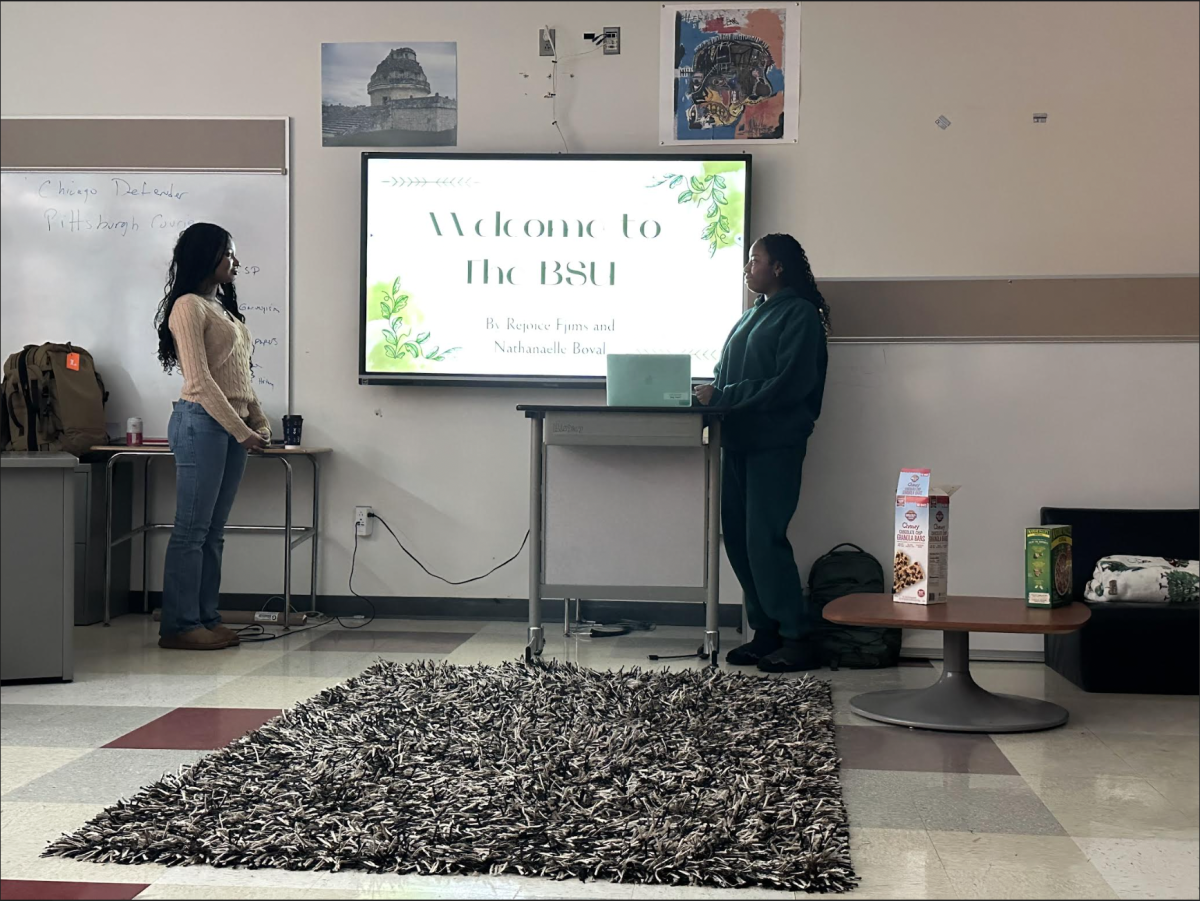
The Black Student Union (BSU) held their first meeting on Monday, March 16, from 3:15 p.m. to approximately 4 p.m.. The club is focused on providing a voice to underrepresented voices in the community and promoting social justice issues. The club plans to meet once every two weeks, with the next meeting on March 30. The club, originally known as “Power Club,” is led by seniors Rejoice Ejims and Elle Boval. The club advisor is METCO Academic Liaison Mike Liddell.
Ejims and Boval changed the name of the club from “The Power Club” to BSU to emphasize the importance of including minority groups. Ejims and Boval encourage all Wayland High School students interested in joining the Black Student Union to attend, regardless of race or ethnicity.
“Forming this club is our way to speak up about all of the things that are happening,” Ejims said. “Also, [to] just build a sense of community with people. I feel like in times when there’s a lot of struggle or a lot of fear going on into the world, people don’t know how to come together and really talk about it and unite and lift up.”
According to Liddell, the Power Club was founded in 2017 after the Class of 2016 valedictorian William Paik saw a presentation from Emerson professor Jabari Asim about stereotypes around marginalized people. Paik organized a group of students from Boston and Wayland to go around English and history classes to point out that the curriculum had lacked education on marginalized communities. Inspired by Paik, a group of students formed Power Club after Paik’s graduation.
Although the past couple of years of the Power Club has been inactive, after a conversation Ejims had with her sister from college, she decided to revise it.
“My sister led [Power Club] when she was a senior and junior,” Ejims said. “Coming back from college, she was talking about [the club], and I was like, ‘you know what? Like, we really need something like that, something to unite the school community, because looking around I feel like it’s tarnishing, and we’re working to repair it. “
Both Ejims and Boval have experience working for social justice organizers through MassVOTE, a non-profit encouraging voting registration and civic engagement. As a part of their work with MassVOTE, they were trained to go door to door knocking and make phone calls to encourage people to register to vote. Ejims also currently works for Youth Justice and Power Union, a youth-lead grassroots organization based in Boston.
In their first meeting, Ejims and Boval discussed ideas to acknowledge Asian-American and Pacific Islander (AAPI) month in May. One of the ideas included creating a poster to display in the hallways of WHS, inspired by previous actions taken by the Power Club in 2022.
“The Black Student Union wants to make sure that more voices are heard,” Liddell said. “One of the initiatives we’ve been talking about in the early days of this group is highlighting AAPI month, so it’s not simply Black students, it’s really an organization that wants to highlight all the voices that are not commonly presented either in classrooms or in common conversation in the hallways. ”
Ejims and Boval are looking to create a board, including roles as vice president, secretary and social media manager. The positions currently have applications open.
Ejims and Boval also asked various METCO students in attendance to discuss any misconceptions some Wayland students might have on the METCO students.
“I feel like there’s an assumption that we’re of a lower-income or we’re not as academically inclined as our Wayland peers,” Ejims said. “Also, in the Wayland “bubble,” you’re surrounded by people who look like you all day, and you don’t get the chance to learn about people from other communities.”
The next BSU meeting will further discuss assumptions surrounding METCO students. Liddell also talked about the possibility of having a civil rights and Historical Black Colleges field trip next year, which would be available to all WHS students — an idea by Assistant Principal Laura Cole.
In order to create a more supportive environment within WHS, Ejims and Boval also said they want to create better relationships with underclassmen.
“I felt like, especially junior year, I felt very alone,” Ejims said. “I was going through a lot of mental health issues, and I didn’t really have anyone to look up to or a lot of teachers to go to.”
Ejims and Boval hope that the club can give space for minorities to talk about their experience with discrimination and combat surgeries some students may have on minority groups.
“I have a lot of friends that live in Wayland that are also people of color, and I hear them talk about comments that they’re non-[people of color] peers have made about them, a feeling like they don’t have anywhere to talk about it,” Boval said. “Including a space where everyone could talk about what they face is good because there’s nowhere else that they can talk about this.”