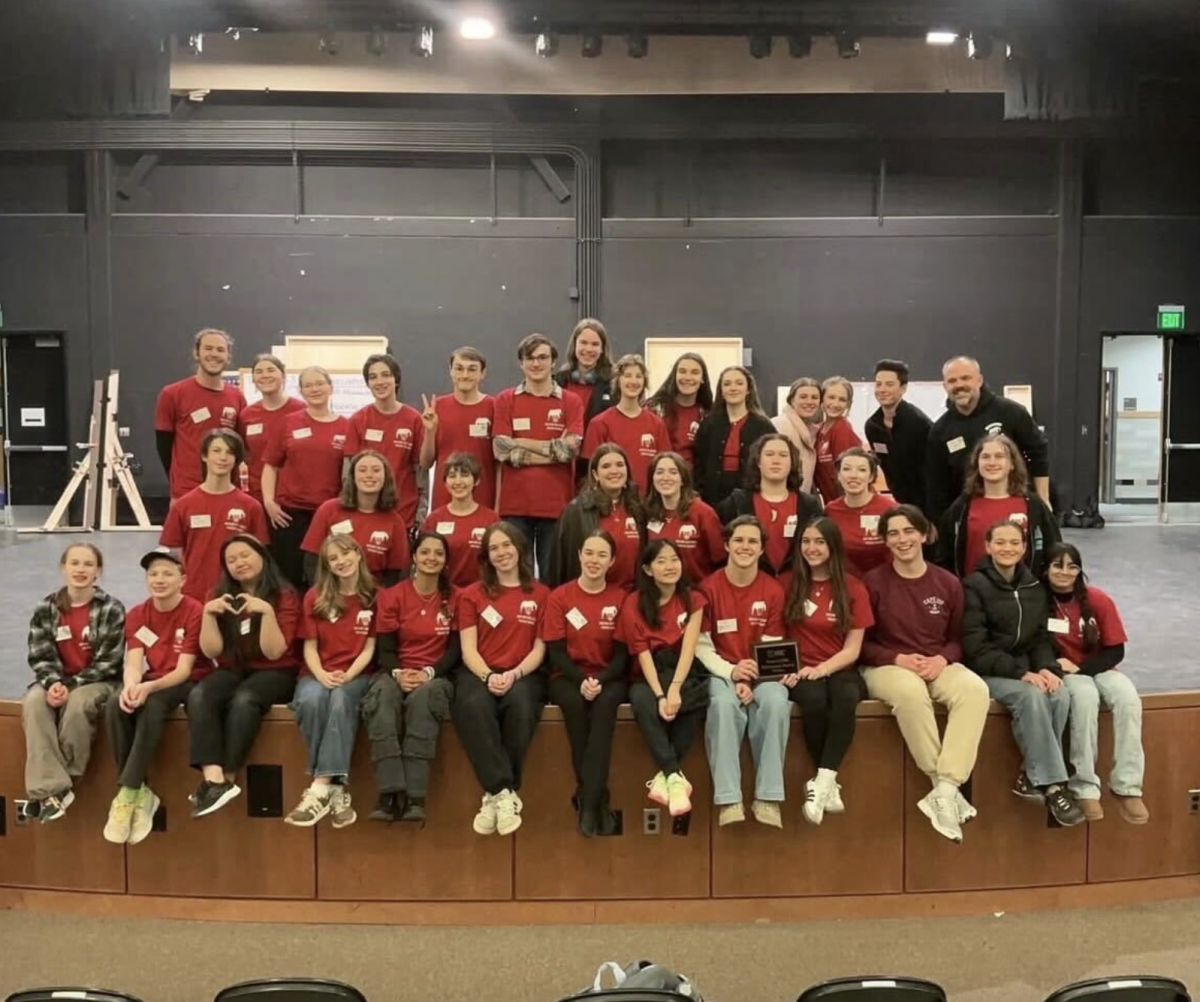

![Wayland Historical Society Executive Director Scarlett Hoey explains the history of the Cochituate Gatehouse.
"The exterior is still a nice monument to remember buildings [involved in] water history," Hoey said. "We all drink lots of water, and it's such an important resource that we kind of take for granted nowadays."](https://waylandstudentpress.com/wp-content/uploads/2026/06/IMG_2024-1200x800.jpg)















On Monday, May 11, two people were left with life-threatening injuries after a gunman opened fire into traffic near Harvard University and Massachusetts Institute of Technology (MIT) in Cambridge.
Authorities identified the shooter as Tyler Brown, a 46 year old man who was reportedly acting erratically while carrying an assault-style rifle when he began firing at passing cars near River Street Bridge along Memorial Drive.
“It’s a tragedy [because] there’s folks [that were] injured,” former gun violence activist and current Harvard law student Emily Handel said.
Handel became involved in gun violence and prevention advocacy after the 2018 Parkland school shooting in Florida.
Investigators reported that Brown fired around 60 rounds, striking at least a dozen vehicles and seriously injuring two people. Witnesses described feeling in a state of panic as drivers tried to escape, getting out of their cars and running. Cambridge police and Massachusetts State Police were on the scene within minutes, and Brown was taken into custody after being shot by law enforcement.
“I think it’s an example of the constant gun violence we face in society today,” Handel said. “[Previously] being a Cambridge resident, it hits really close to home.”
Brown is a former Marine who is licensed to carry a firearm and has a lengthy criminal history involving drug abuse, crime and mental illness.
In order to obtain a license, an individual must pass a background check and complete a certified safety course. They must also not be a “prohibited person” and you must be “suitable.” The law defines a prohibited person by certain factors such as felony, convictions or other offenses. After that, the person who gives the individual the license has to deem them “suitable.” In order to even be eligible they must submit an application, pay a fee, provide proof of residency and provide any additional documentation as required by their local licensing authority.
Massachusetts is consistently ranked among the states with the strongest gun laws in the country. Under state law, anyone who wishes to possess or carry a firearm must first obtain either a Firearm Identification Card (FID), or a License to Carry (LCT).
An LCT is valid for five to six years and expires on the holder’s birthday. It allows an individual the ownership of regular rifles and shotguns but not machine guns. Machine gun licenses are only handed out to certified firearm instructors for police training or a bona fide collector, someone who collects guns not for historical or educational purposes instead of ordinary usage.
An LTC also does not automatically allow assault-style firearms, which according to Massachusetts law, is any firearm which is a semiautomatic. A semiautomatic firearm shoots one bullet at a time but automatically loads the next one in, and it also doesn’t automatically allow large capacity feeding devices, which are machines capable of holding more than a certain number of rounds.
The recent shooting in Cambridge shows that strict regulations alone cannot completely prevent violent acts. Massachusetts requires firearm licenses, mandatory safety training, background checks and restrictions on certain weapons, all of which are intended to reduce gun violence in our state and keep dangerous weapons out of reach of those deemed unfit to possess them.
However, even with these laws in place, tragedies can still happen when individuals choose to ignore or bypass legal restrictions as shown in the recent Cambridge shooting involving Brown.
“I see more [and] more shootings, and it still feels like [the] threat of gun violence is still very present in our society,” Hansel said.
The Cambridge shooting draws attention to the issue of gun violence even within a state that has extensive precautions regarding the usage of guns.
“I think the [Cambridge shooting] is a good opportunity to reflect on gun violence prevention as a whole,” Handel said.