![Wayland Historical Society Executive Director Scarlett Hoey explains the history of the Cochituate Gatehouse.
"The exterior is still a nice monument to remember buildings [involved in] water history," Hoey said. "We all drink lots of water, and it's such an important resource that we kind of take for granted nowadays."](https://waylandstudentpress.com/wp-content/uploads/2026/06/IMG_2024-1200x800.jpg)













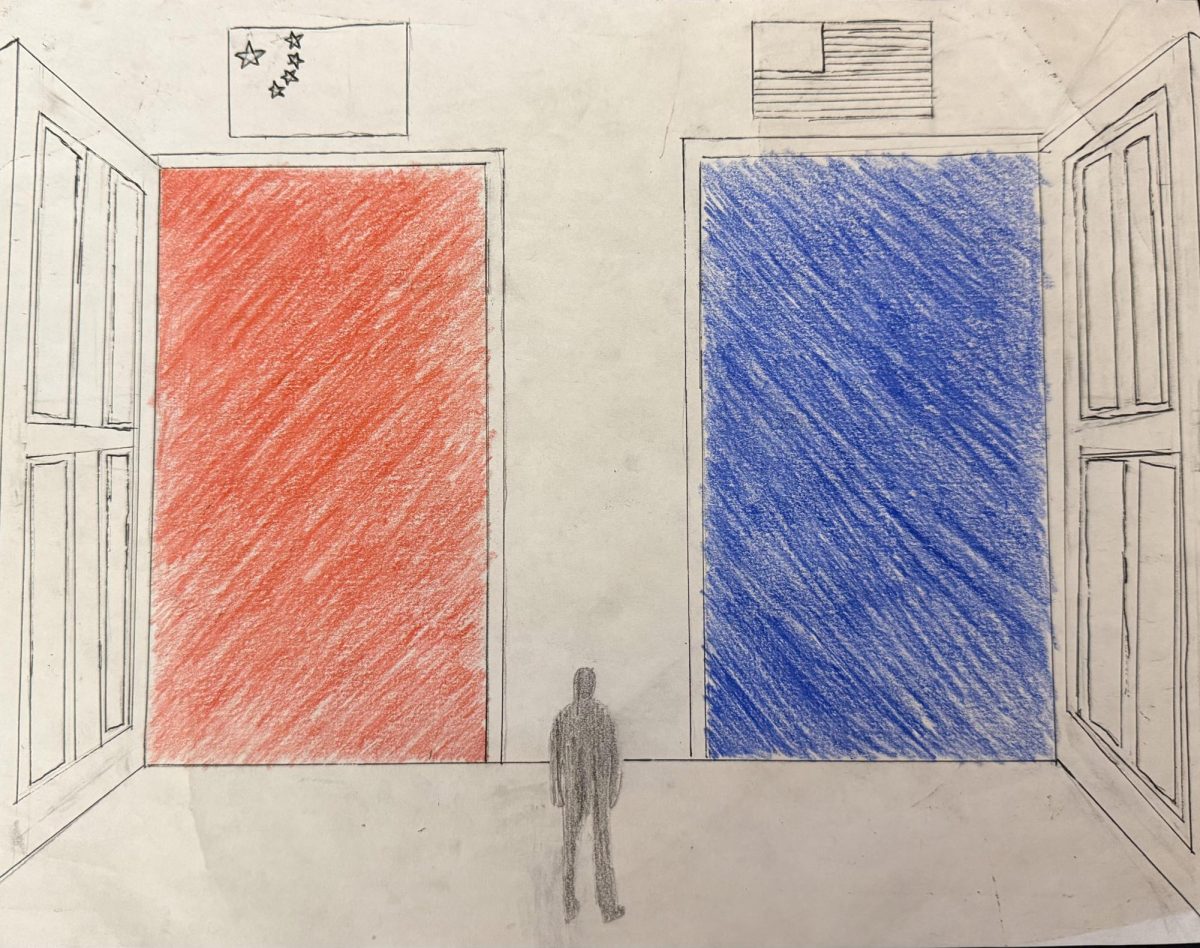
As someone who is a Chinese American, one of the struggles I’ve had through my life is finding a role model who not only looked like me, but also shared a similar cultural background. Luckily, in the latest 2026 Winter Olympics, I watched two amazingly talented Chinese American gold medalists: figure skater Alysa Liu and freestyle skier Eileen Gu. However, public perception has turned these two women into a disturbing question: How American am I?
Both Liu and Gu represent success stories of Chinese American athletes that serve as an inspiration for people across the world. With so few Chinese athletes in the public eye, these two give kids like me somebody to look up to and see themselves in. However, the public perception of these figures is vastly different because of one key distinction. While Liu chose to represent the United States in the Olympics, Gu competed for the People’s Republic of China to represent her mother and inspire girls across the globe.
Because of this one difference, Liu is treated like a celebrity while Gu is called a traitor to the U.S. and is constantly condemned. Even Vice President JD Vance has criticized Gu, implying that she should have competed for the U.S. at the winter games.
Clearly, this was never a question of sports, but always a question of nationalism.
It isn’t anything new for an athlete to switch the nation they represent. Gu’s choice was not uncommon, nor should it have been controversial. The relentless criticism levied at her reveals an anti-Chinese American sentiment that had been largely hidden before the games. What this backlash revealed to me and many others is that it is wrong to value your family and heritage over U.S. pride.
I and many others of Chinese descent feel that we tend to be fairly integrated into American culture, just white enough to blend in. This narrative creates pressure from family, friends or ourselves. It’s the idea that we aren’t Asian enough. Every time I trip up speaking what should be my native language of Mandarin, or I find myself staring blankly at a character I should recognize, I feel that pressure build.
Balancing the weights of being Chinese and American has been a struggle throughout my life, but it’s not one I would ever choose to give up. I value my family and culture, and I love the joy that comes with it, so to be told that it is wrong to care about my heritage and my family’s history was like a slap in the face. If living in America makes it hard to be Chinese enough and loving my family makes me not American enough, what am I?
To have a multicultural background should be something that is celebrated, and at WHS, it generally is. However, these events reveal that many people across America believe that we should be made to choose whether to be Chinese or American. This is an all too common perspective shared by those who are either ignorant, malicious or racist.
Nobody should ever be made to choose between family or home, and beyond that, when somebody does choose to value their family, they should never be told that their choice is wrong just because it isn’t “American” enough.
Gu choosing to represent her mother’s home does not make her any less American, just as Liu’s choice to compete for Team USA doesn’t diminish her Asian background. Despite the controversy and the drama, in reality, there is no choice we are forced to make. Loving our family does not make us un-American, and it does make any of us a “traitor.” No part of anybody’s cultural background should ever be used against them as a weapon.