
![Wayland Historical Society Executive Director Scarlett Hoey explains the history of the Cochituate Gatehouse.
"The exterior is still a nice monument to remember buildings [involved in] water history," Hoey said. "We all drink lots of water, and it's such an important resource that we kind of take for granted nowadays."](https://waylandstudentpress.com/wp-content/uploads/2026/06/IMG_2024-1200x800.jpg)










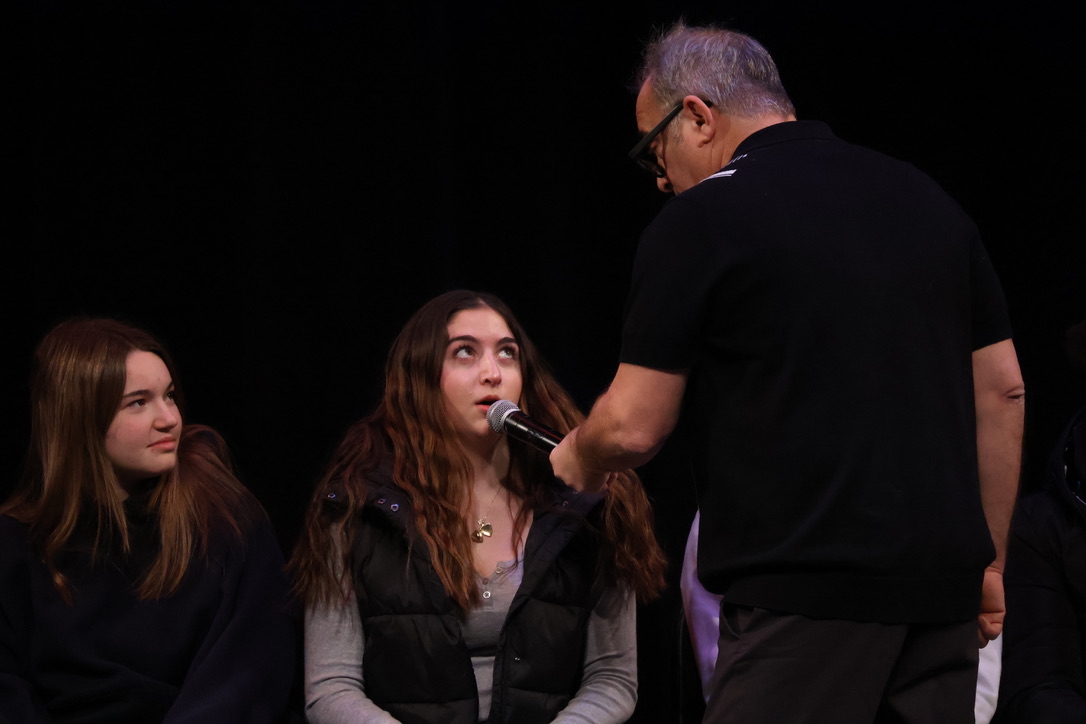
On Tuesday, Jan. 27, METCO coordinator Mark Liddell gave his third annual Winter Week presentation. This year, the presentation was titled “A Troublesome Word: A Lesson on the Value Gap.”
The lesson focused on the history of the N-word and how it connects to a “value gap,” or the idea that some groups have been valued less than a dominant group.
Liddell opened with a land acknowledgment, noting that the school sits on the unceded land of Indigenous tribes. He then discussed the history of the N-word, a demeaning racial slur believed to have originated from a Latin word meaning “black” before evolving into a derogatory term used in the 1800s to degrade Black Americans.
The problem with the N-word, beyond its obvious offensiveness, is that it enforces a “value gap” by establishing a societal hierarchy, Lidell said.
To help illustrate the concept, Liddell played video clips of several speakers, including the Rev. Al Sharpton and Akala.
Liddell also discussed the prominence of the N-word in pop culture throughout history and its frequent use in contemporary music. Liddel said students are exposed to the word on a daily basis, and should understand its historical context and the harm its use can cause.
“I’m sure that people hear the word used in music and movies,” Liddell said. “My hope is that people will think twice about what that word actually means.”
Some students also said Wayland High School lacks education and discussion about race and history.
“I thought Mr Lidell did a great job and the presentation was very fascinating,” junior Sienna Bartlett said. “I thought the presentation was also important especially at Wayland because a lot of kids unfortunately lack knowledge of racist history and the harm of racist language.”
By sharing personal stories from his family and his own experiences, Liddell explored the nuance and history of the N-word from an educational perspective.
While WHS history classes include some lessons on Black history, Liddell said it is important for students to receive context on serious topics such as the N-word.
“Just because [the N-word] is ubiquitous doesn’t mean it won’t cause injury,” Liddell said.
The WHS English curriculum includes books that use the N-word. In order to respectfully go about handling the outdated and offensive vocabulary, English teacher Sara Snow said it’s important students are educated on the history of the word.
“It’s really important to notice how [the word is] being used in different contexts,” Snow said. “[We need to be] educating people and giving them context.”
Liddell said he hopes to continue the annual Winter Week presentation next year because he believes schools do not provide enough education on the context of race and history and how it connects to daily life.
“There’s so much emphasis on testing and the process of going to college,” Liddell said. “There’s not much emphasis on talking about how we engage with one another.”